What to Do Immediately After a Burst Pipe — A Long Island Homeowner's Guide
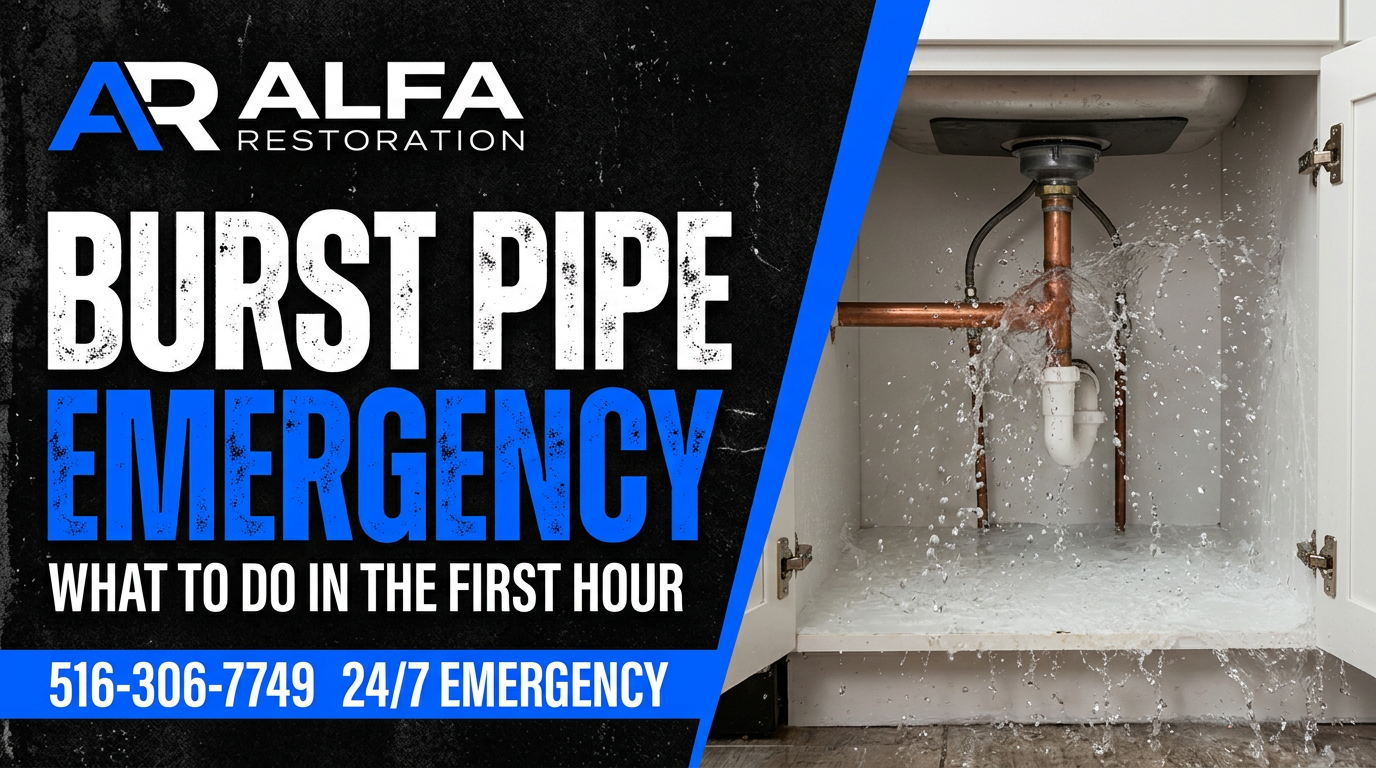
A burst pipe at 2 AM is every homeowner's nightmare. Water is gushing into your basement, ceiling, or wall cavity — and every minute that passes adds hundreds of dollars to the repair cost.
The decisions you make in the first 60 minutes determine whether your burst pipe is a $3,000 repair or a $20,000 disaster. This is the exact step-by-step Long Island homeowners need to follow when a pipe bursts.
Already have water everywhere? Skip to the action steps and call (516) 306-7749 right now.
The First 60 Minutes Matter Most
Burst pipes release water at 30–100 gallons per minute. In 30 minutes, your basement can have 1,000+ gallons of water in it. Drywall, hardwood floors, and personal belongings absorb water within hours. Mold begins forming within 24–48 hours. Speed is everything.
Step 1 — Shut Off the Main Water Valve
This is the single most important thing you do. Your home's main water shutoff valve is typically located in the basement (usually on the front wall, where the water line enters from the street), in a utility closet on the ground floor, or outside in a buried meter box in some Long Island communities. Turn the valve clockwise (right) to close. If you've never used it before, it may be stiff — use a wrench if needed. Don't know where your shutoff is? Find it before the next emergency.
Step 2 — Shut Off Electricity to Affected Areas
If water is near outlets, light fixtures, or your electrical panel, kill the breakers immediately. Water and electricity are a deadly combination. If you can't safely reach your panel, call your electric company.
Step 3 — Document Everything Before You Move Anything
Before you start cleanup, photograph and video everything: the burst pipe itself, standing water depth, affected ceilings, walls, and floors, damaged furniture and belongings, and the wider scene from multiple angles. This documentation is critical for your insurance claim. Don't skip this step — even if water is still flowing.
Step 4 — Call Your Insurance Company AND a Restoration Company
Call both — but if you can only do one first, call a restoration company. Insurance adjusters take 24–72 hours to arrive. Restoration companies arrive in 30 minutes. Every minute of delay multiplies the damage. Alfa Restorations responds across Long Island in under 30 minutes, 24/7, and bills insurance directly so you only pay your deductible.
Step 5 — Start Removing Standing Water
If the water is shallow and you have the equipment: use a wet/dry shop vac, mop water out, open doors and windows if outside humidity is low, and move undamaged belongings to dry areas. Do NOT use a regular household vacuum — it's an electrocution risk. Do NOT wade into water deeper than ankle level if there's any chance of electrical contact. If the water is significant, leave it for the professionals. A truck-mounted extractor removes 100+ gallons per minute. Your shop vac removes maybe 5.
Step 6 — Salvage Belongings
Move dry items out of the area. For wet items: photos and documents lay flat on dry towels (do not stack), clothing and fabric move to a dry area but do not pile, electronics unplug and do not turn on, furniture elevate on blocks or remove from area, books stand on end and fan pages.
Step 7 — Don't Make Permanent Repairs Yet
Before the insurance adjuster arrives, do NOT replace drywall or flooring, make permanent plumbing repairs (temporary patches are fine), throw away damaged items (set them aside for adjuster review), or use bleach or harsh cleaners that may destroy evidence. Mitigation (stopping further damage, drying, water extraction) is required and reimbursable. Permanent repairs come after the claim is approved.
What Happens Next — The Restoration Process
Once your restoration company arrives, expect: damage assessment with thermal imaging and moisture meters, water extraction with industrial equipment, structural drying with LGR dehumidifiers and air movers (3–5 days), antimicrobial treatment to prevent mold, removal of unsalvageable materials (carpet padding, baseboards, soaked drywall), final moisture verification before reconstruction, reconstruction of drywall, flooring, paint, and trim, and insurance billing handled directly with your carrier. Total timeline: 1–4 weeks for most burst pipe cases.
Long Island Burst Pipe Prevention
Most Long Island burst pipes happen between December and February. Insulate pipes in basements, attics, and exterior walls. Keep the heat at 55°F+ even when traveling. Open cabinet doors under sinks during cold snaps. Let faucets drip during freeze warnings. Disconnect outdoor hoses before winter. Replace rubber appliance hoses with braided stainless steel.
Frequently Asked Questions
How quickly does water damage from a burst pipe become permanent? Hardwood floors warp within 24 hours. Drywall begins crumbling at 48 hours. Mold starts at 24–48 hours. Subfloor damage is usually irreversible after 72 hours of continuous moisture.
Is burst pipe damage covered by insurance? Yes — burst pipes are sudden, accidental events covered under standard NY homeowners insurance. The damage from the water is covered. The pipe repair itself may or may not be, depending on policy.
How much does burst pipe restoration cost on Long Island? $3,000–$15,000 for most cases. Severe burst pipes affecting multiple floors can run $25,000+.
Can I clean up burst pipe water myself? Small amounts, yes. Anything more than a small puddle requires professional extraction and structural drying to prevent mold and hidden damage.
Burst pipe right now? Don't wait. Call Alfa Restorations at (516) 306-7749 — 30-minute response across Long Island.