The First 24 Hours After Water Damage: A Homeowner's Survival Guide
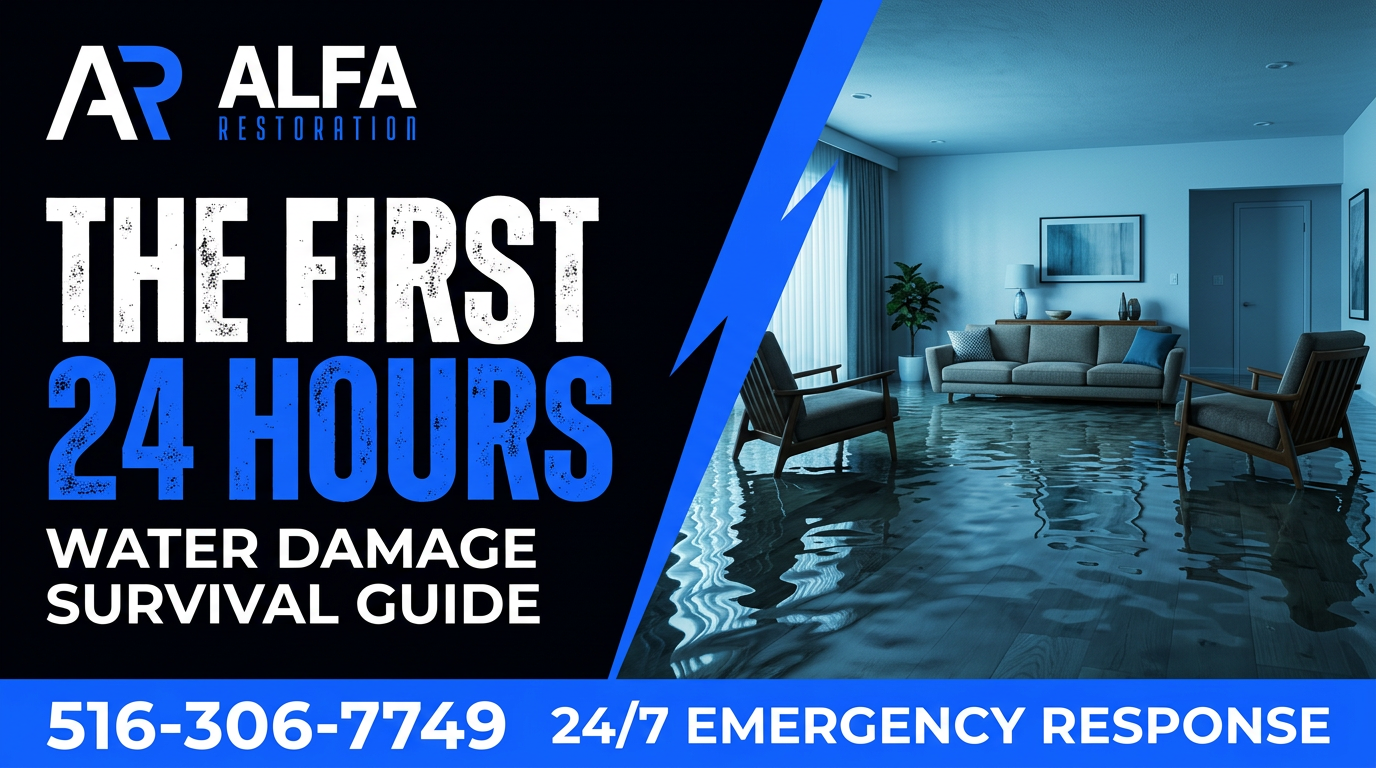
If you're reading this with water on the floor, take a breath. The next 24 hours will determine whether you're dealing with a cleanup project or a months-long restoration nightmare. At Alfa Restorations, we've responded to thousands of water emergencies, and the homes that recover fastest — with the lowest costs and zero mold — all share one thing in common: the homeowner acted quickly and acted correctly.
Here's exactly what to do, in order.
Hour 1: Stop the Source and Stay Safe
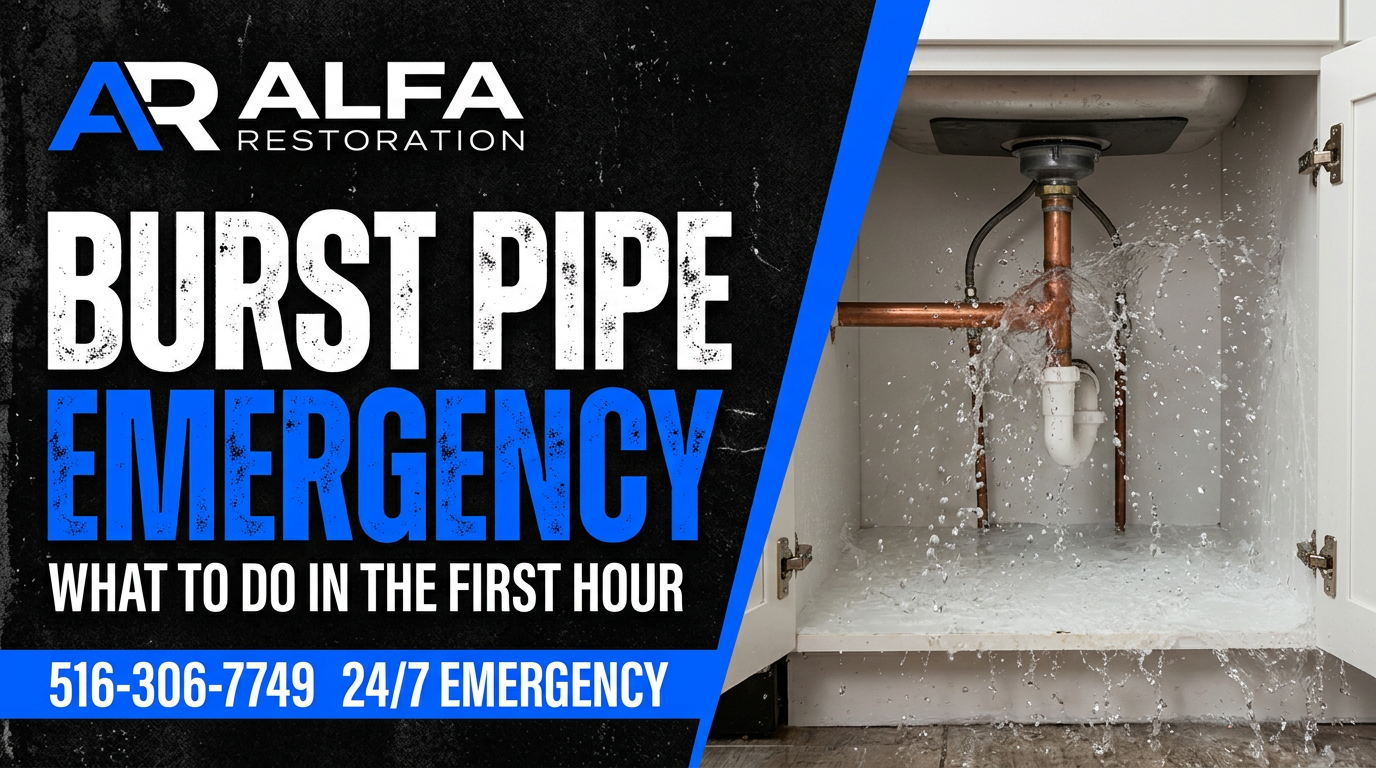
Before you touch anything wet, shut off your home's main water valve. It's typically located near the water meter, in the basement, or outside next to the foundation. If the flooding is from a storm or sewer backup, skip ahead — but if it's a burst pipe, leaking appliance, or overflowing fixture, the bleeding has to stop first.
Next, kill the electricity to affected areas at the breaker panel. Water and electricity are a deadly combination, and standing water can become energized from a submerged outlet or appliance you can't see. If your panel is in the flooded area, do not wade in — call an electrician or your utility company.
Finally, get pets and family members out of the affected zone. Contaminated water (anything from a toilet, sewer, or outdoor flood) carries bacteria that can cause serious illness, especially in children.
Hours 2–6: Document Everything Before You Touch It
This is the single most overlooked step, and it costs homeowners thousands in denied insurance claims. Before you move a single piece of furniture or sop up a single puddle, take photos and videos of every affected room. Capture the water level on the walls, the soaked carpet, the warped baseboards, the damaged belongings. Time-stamp everything. Open drawers, photograph the contents.
Then call your insurance company to start a claim. Get a claim number and ask what your policy requires you to do (and not do) before an adjuster arrives. Most policies require you to mitigate further damage — meaning you can't just leave the water sitting — but they also want documentation.
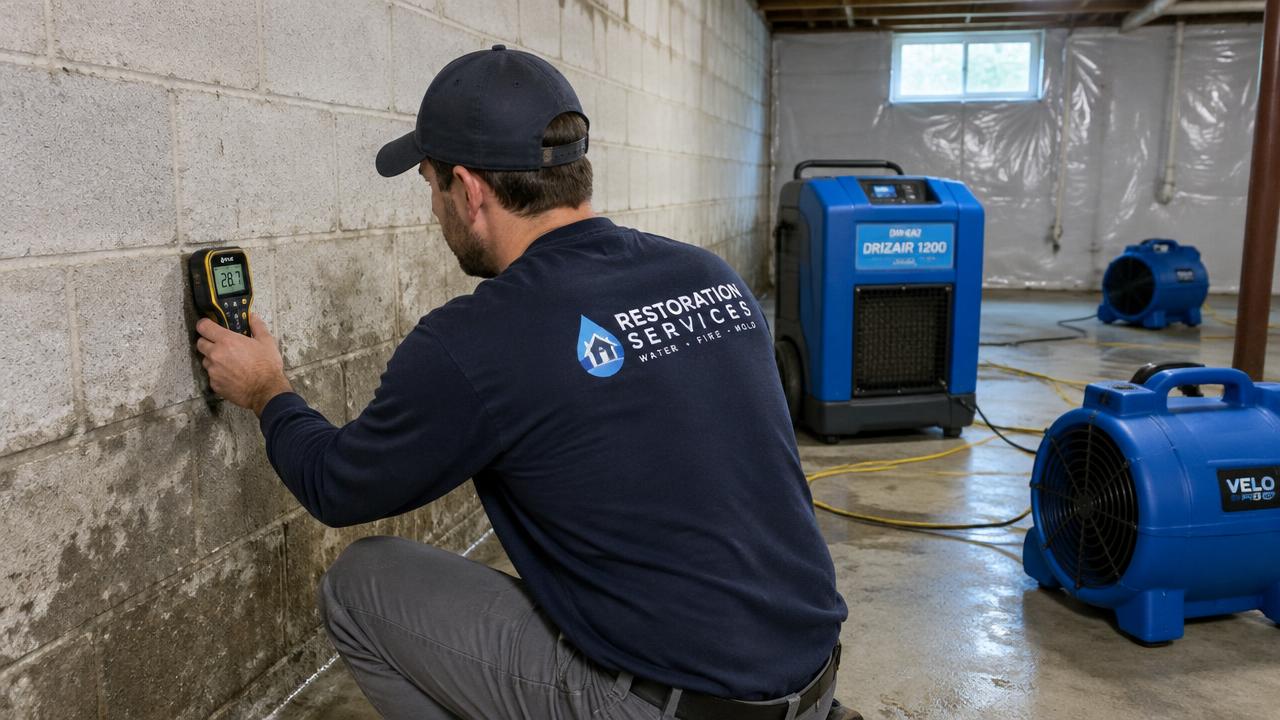
This is also when you should call a professional water damage restoration company. We arrive with industrial extraction equipment, document the damage with moisture mapping technology insurance adjusters trust, and start drying within the critical window.
Hours 6–24: The Race Against Mold
Mold begins growing on wet materials within 24 to 48 hours. Once it takes hold inside walls, under flooring, or in your HVAC system, you've crossed from a water damage problem into a mold remediation problem — which is more invasive, more expensive, and a serious health hazard.
If you're handling initial cleanup yourself before professionals arrive, focus on removing standing water with wet/dry vacuums (never a regular vacuum), pulling up soaked rugs and carpet padding, and getting air moving with fans and open windows if humidity outside is lower than inside. Do not use your home's HVAC system if water has reached the ductwork — you'll spread spores throughout the house.
Don't bother with bleach on porous surfaces like drywall or wood. It doesn't reach the roots, and it adds moisture to materials that need to dry out.
What Most Homeowners Get Wrong
The biggest mistake we see isn't action — it's hesitation. Homeowners assume that because the visible water is gone, the problem is solved. But drywall, subflooring, insulation, and wall cavities can hold moisture for weeks. By the time you smell mildew or see warping, the damage is already extensive.
Professional restoration uses moisture meters, thermal imaging, and structural drying equipment that pulls water out of materials your towels can't reach. We can usually save flooring, drywall, and cabinets that homeowners would otherwise replace — saving thousands.
When to Call Alfa Restorations
Call us immediately if water has been sitting longer than a few hours, the source was contaminated (sewage, storm water, dishwasher, or toilet overflow), water has reached walls or hardwood floors, or you're not sure how far it has spread.
We answer 24/7, arrive within the hour in most cases, work directly with your insurance company, and don't leave until your home is dry, clean, and safe. Call (516) 306-7749 — anytime, day or night.