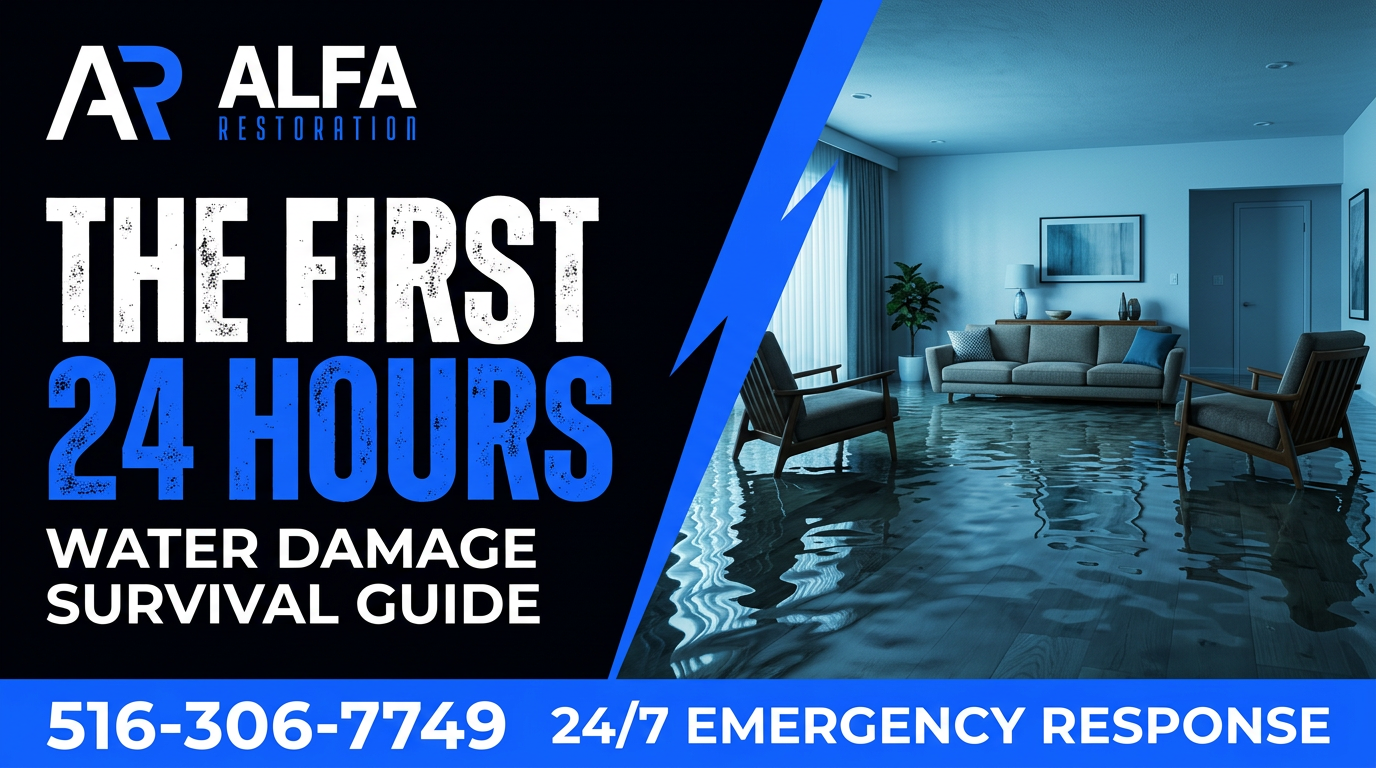
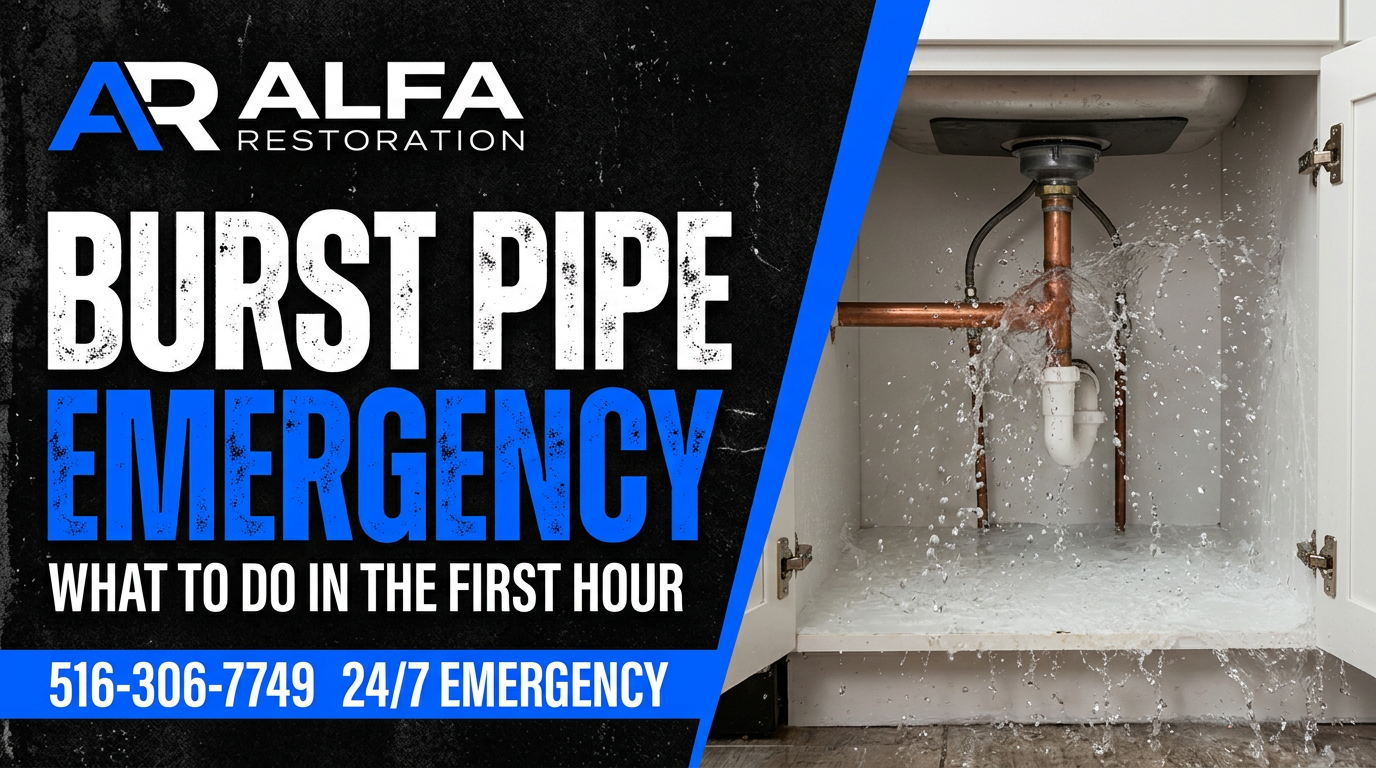
Ceiling Dripping Water? Here's What To Do in the First 15 Minutes
Water dripping from a ceiling is one of the most stressful things a homeowner can see. Your instinct is to grab a bucket and call somebody — and both are correct, in that order. But there are a few other steps in between that determine whether this becomes a $2,000 repair or a $20,000 restoration project.
The next 15 minutes matter more than the next 15 hours. Here's exactly what to do.
Step 1: Shut Off the Water Supply
If the drip is coming from anywhere below a bathroom, kitchen, laundry room, or upstairs plumbing, shut off the water main. Do it before you do anything else. It takes ten seconds and it stops the source in almost every case that isn't a roof leak.
Your main shutoff is usually in the basement, near where the water line enters the house, or in a utility closet on slab-built homes.
Step 2: Turn Off Electricity to That Room
Water and electricity share ceilings. Recessed lights, ceiling fans, and junction boxes are prime paths for water to travel and prime hazards for shock and fire. Flip the breaker for that room at the panel. Don't touch light switches or fixtures that are near the leak.
Step 3: Punch a Hole in the Bulge
This one feels wrong, but it's right. If the ceiling is sagging or bulging with trapped water, take a screwdriver or a pen and poke a hole in the lowest point of the bulge, with a bucket underneath. A controlled release protects the rest of the ceiling. An uncontrolled collapse damages everything below.
Do not skip this step if you see a visible bulge — a sagging ceiling can dump 20 gallons of water at once.
Step 4: Move Everything Out of the Way
Furniture, electronics, rugs, artwork. Water spreads horizontally along ceilings and floors much faster than most people expect. Everything within a 10-foot radius should move now, not after you finish the phone call.
If items are already wet, get them up off the floor and separated so they can start air-drying.
Step 5: Photograph Everything
Before you clean, before you move too much, before you start soaking up water — take pictures and video. Wide shots of the room, close-ups of the damage, the source if you can identify it, any damaged possessions. Insurance adjusters need this documentation and it's easier to over-document now than reconstruct later.
Step 6: Start Extracting Water
Towels, mops, wet/dry vacs if you have one. The longer water sits on flooring, the deeper it soaks into subflooring, and the more expensive drying becomes. If you have box fans, aim them across wet areas. Open windows if humidity outside is lower than inside.
Do not use a normal household vacuum. Use a shop vac or towels only.
Step 7: Call a Restoration Professional
Home water damage is not a DIY dry-out project past a few square feet of hard flooring. Wet drywall, insulation, and subfloors need commercial-grade dehumidifiers and air movers to dry properly within the 48-hour mold window. A restoration company brings the equipment, documents the loss for your insurer, and coordinates any needed demolition and rebuild.
Alfa Restorations answers the phone 24/7 across Long Island. Our team is typically on-site within 30 minutes of your call, with extraction equipment, moisture meters, and drying gear.
What Not To Do
- Don't ignore a small stain and hope it dries. Ceilings don't self-heal, and the source is still active somewhere.
- Don't paint over water stains before drying and finding the source. You're just hiding the mold that's about to form.
- Don't wait to call insurance. Most policies have prompt-reporting requirements and delaying can hurt your claim.
- Don't sign a repair contract with the first person who shows up unsolicited. Storm chasers and door-knockers are common after major weather events on Long Island — always call a company you can verify.
The Bottom Line
Ceiling drips have three phases: stop the water, protect what's below, dry the structure. If you handle phase one and two in the first 15 minutes and get a professional started on phase three within a few hours, most ceiling leaks resolve without major reconstruction.
Call Alfa Restorations at (516) 306-7749 — 24/7 emergency response across Nassau and Suffolk.