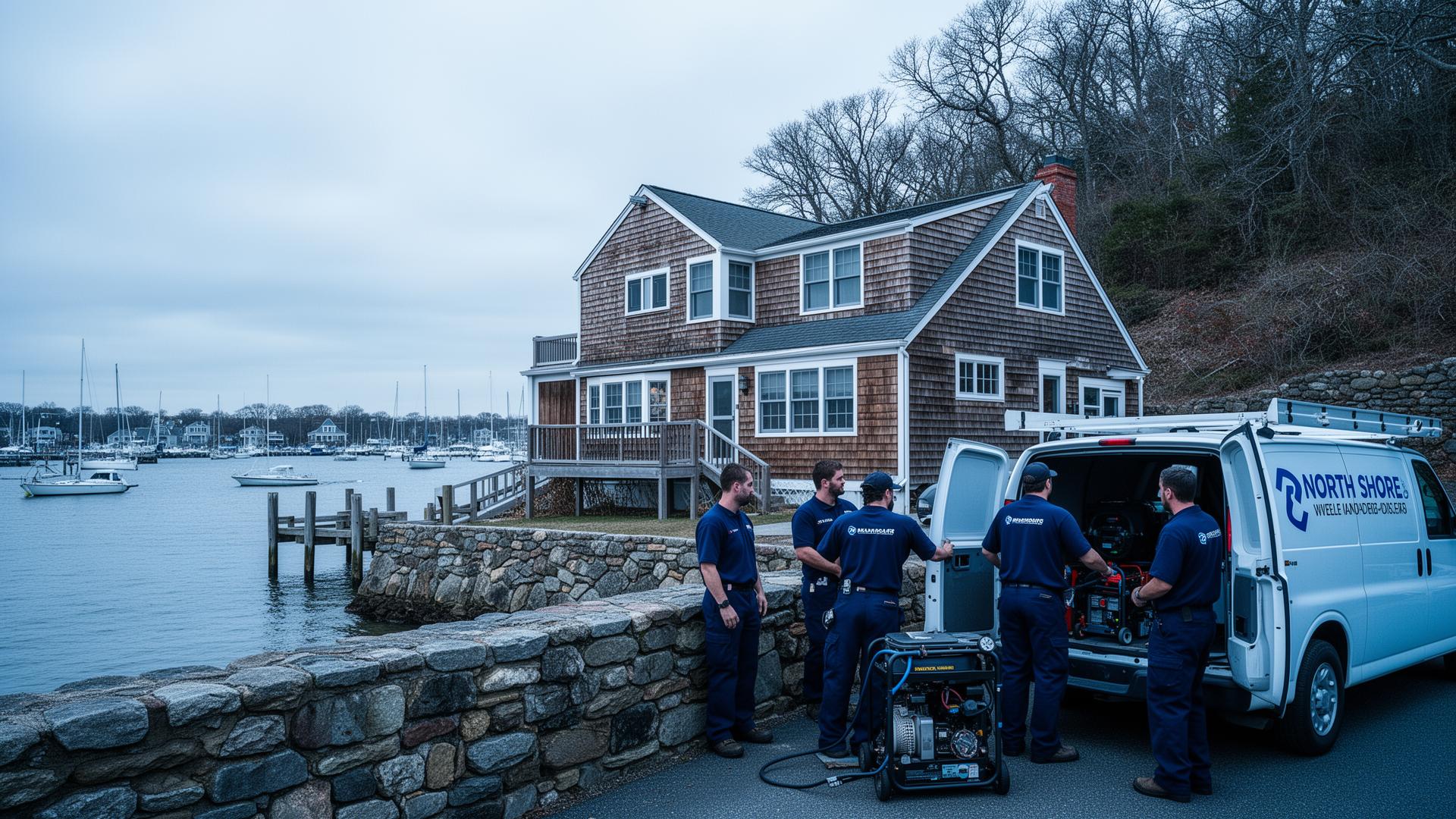
Water Damage Restoration in Huntington, NY
Alfa Restorations reaches Huntington in about 30 minutes, 24 hours a day. Burst pipes, ceiling and roof leaks, appliance failures and storm intrusion, from the village and Halesite through Huntington Station, Greenlawn, Centerport and Melville. IICRC-certified, insurance approved.
Why Huntington homes take water damage differently
Huntington's housing stock splits cleanly in two, and so do the losses we respond to.
The historic village and harbor-side streets. Around Main Street, New York Avenue, Halesite and Lloyd Harbor there are homes well over a century old, with stone and brick foundations, plaster-on-lath walls, and original hardwood. These are specialty drying jobs. Plaster and old-growth hardwood hold bound water far longer than modern drywall, and a standard three-day dry-out will leave them wet while reading dry at the surface. Pulling plaster that could have been saved is the common mistake, and so is declaring the job finished too early. These homes need Class 4 drying, low-humidity equipment, and a longer monitoring period.
The hillside and postwar developments. Huntington Station, Greenlawn, Melville and the newer builds north of Jericho Turnpike sit on the North Shore moraine, which means slope. Water moves downhill toward the harbor and toward low points between hills, arriving against foundations and through window wells rather than from a failed pipe. On the plumbing side these homes bring their own pattern: finished second floors and attics mean a supply line or HVAC condensate failure upstairs sends water down through ceilings into two or three rooms at once.
The losses we see most in Huntington
Burst and frozen pipes. Pipe runs through uninsulated attics, garages, and exterior walls on north-facing elevations. Huntington sees overnight lows in the teens most winters, and the harbor-side wind exposure makes north and west walls worse than the thermometer suggests. See burst and frozen pipe restoration.
Ceiling water damage from above. A failed supply line, a leaking shower pan, or an HVAC condensate line on an upper floor. Water tracks along joists before it comes through, so the stain is usually not under the source, and the wet area in the cavity is usually much larger than the stain on the ceiling.
Roof and gutter failures. Complex rooflines, mature tree cover, and heavy leaf load mean blocked gutters and ice dams. Water backs up under shingles at the eave and enters the attic, soaking insulation while the ceiling below still looks fine.
Appliance and water heater failures. Water heaters past fifteen to twenty years, washing machine hoses, dishwasher and refrigerator supply lines. The most common single cause of interior water damage in any housing stock, and the most preventable.
Storm intrusion. Nor'easters driving rain against the north and west elevations, and wind damage opening the envelope.
For flooded basements and groundwater seepage in Huntington, which are their own problem here given the slope and the older foundations, see basement flooding cleanup in Huntington.
What we do
- Emergency water extraction, 24/7
- Structural drying with documented daily moisture readings
- Specialty drying for plaster, old-growth hardwood and stone foundations
- Ceiling and multi-floor water damage repair
- Attic and insulation removal and replacement after roof leaks
- Mold prevention and remediation
- Contents pack-out and storage
- Reconstruction and finish carpentry, matched to historic trim profiles where needed
- Insurance documentation and direct billing
Areas we cover around Huntington
Frequently Asked Questions
About 30 minutes on average, any hour. We are based in Hauppauge, roughly fifteen minutes south, so Huntington is one of our shortest response areas in Suffolk.
Often, yes. Plaster can be dried in place when the loss is clean water and we are called early, but it needs lower humidity and a longer drying period than drywall because it holds bound water. We use moisture meters appropriate to plaster and lath rather than assuming drywall readings, and we monitor until readings match unaffected plaster in the same house. The failure mode with old plaster is declaring it dry too early, not tearing out too little.
Water is travelling along a joist or a pipe run before it reaches a low point and comes through, so the source is almost never directly above the stain. Thermal imaging and meters find the actual wet area in the cavity, which is typically several times larger than the visible stain. The reason this matters: painting over the stain leaves wet insulation and framing above it, which is how a stain becomes a mold remediation three weeks later.
A burst pipe, an appliance failure or storm damage that opened the roof are sudden and accidental and are normally covered. Groundwater seepage into the basement is not, and needs flood coverage. A slow leak that caused damage over months is normally denied as deferred maintenance. We document the cause and extent to carrier standards and bill insurance directly where coverage applies.
Shut the water off at the main. Shut off power to the affected area at the panel if you can do it safely. Photograph everything before moving anything. Move what you can lift off wet floors. Do not cut into drywall or ceilings before the inspection, since that complicates the claim.
More for Huntington homeowners
Water in the House? We're Ready 24/7.
30-minute average response across Nassau and Suffolk County.
(516) 306-7749