After Restoration: When Do You Actually Need Air Quality Testing?
Air quality testing after restoration work is one of the most misunderstood topics in the industry. Some restoration companies push it on every job. Some skip it even when it's warranted. Homeowners often don't know when to ask for it, what the results actually mean, or whether to trust them.
Here's a straight answer: sometimes air quality testing is essential. Sometimes it's a waste of money. The difference depends on what kind of damage happened, what work was done, and who's asking for the results.
What Air Quality Testing Actually Measures
Most post-restoration air testing looks for airborne mold spores. Samples are collected from inside the affected area and from a control location outside the home, then sent to a lab that identifies and counts spore species.
Results are read comparatively: indoor levels should be lower than or similar to outdoor levels, with a similar species profile. Elevated indoor counts, or the presence of indicator species like Stachybotrys or Chaetomium at meaningful concentrations, suggest ongoing moisture and active growth.
Some testing also measures VOCs (volatile organic compounds) after fire or smoke damage, or specific contaminants after sewage or biohazard cleanup.
When Testing Is Worth Doing
After mold remediation. This is the main use case. A post-remediation verification test (often called a "clearance test") confirms that remediation actually worked. If you paid for mold removal, you want independent confirmation the job was successful. Some insurance companies and real estate transactions require it.
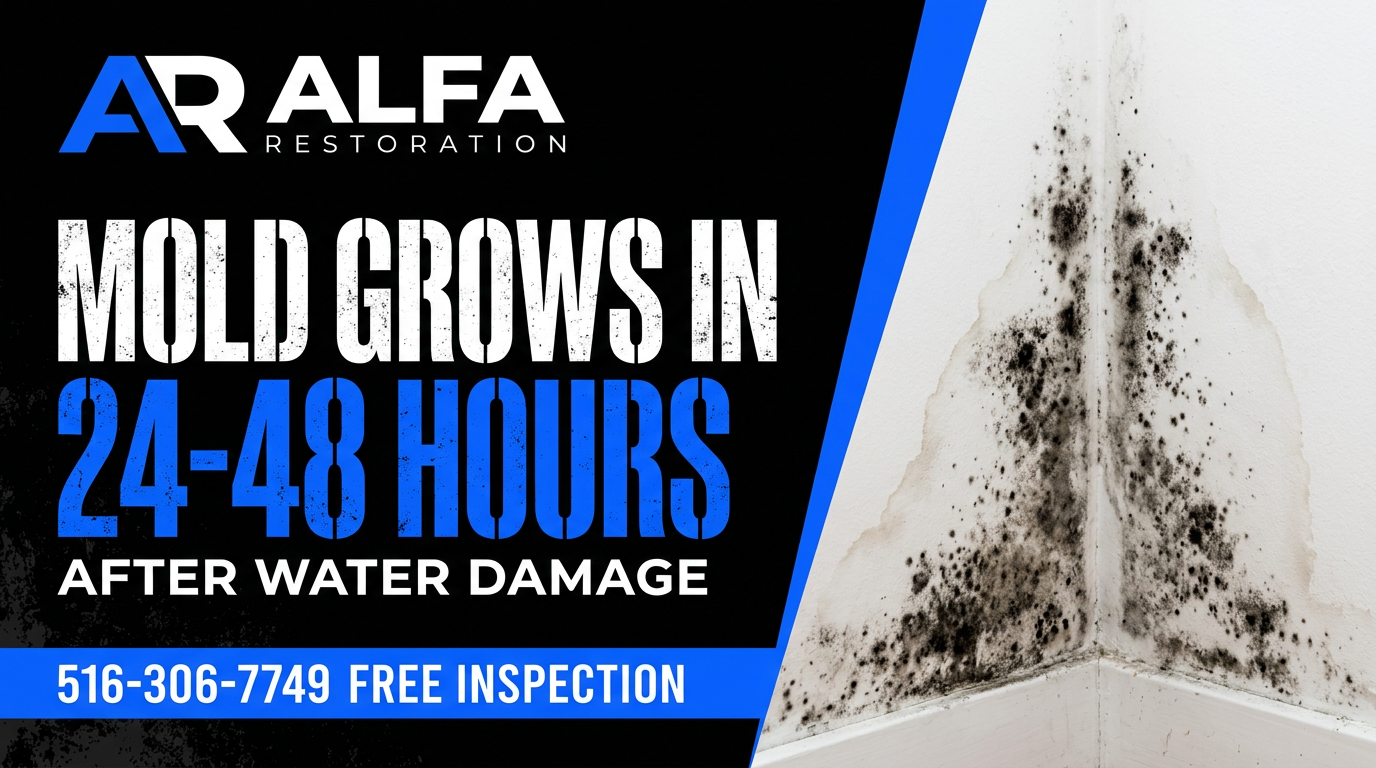
After significant water damage where mold was suspected or visible. Especially if the damage sat for more than 48 hours before drying began. Confirms that the drying process didn't just hide mold behind clean-looking drywall.
After fire and smoke damage in occupied spaces. Fire produces VOCs, formaldehyde, and combustion byproducts that persist in materials long after visible soot is gone. Testing confirms indoor air is safe for return.
When occupants have unexplained symptoms. Persistent respiratory issues, headaches, or allergic reactions in a home that had past water or mold problems warrant testing to rule out ongoing contamination.
Before real estate transactions. Buyers or sellers who want documented air quality can use testing as due diligence.
When Testing Is Not Necessary
Minor water damage that was dried within 24 hours. If the affected area was small, dried quickly, and never showed mold growth, testing is unlikely to reveal anything meaningful.
After routine cleanup with no visible mold or musty odor. Not every water event creates a mold problem. Small clean-water leaks that were addressed immediately usually don't require testing.
When you're just looking for reassurance without a specific concern. Air testing is a snapshot in time and doesn't guarantee future conditions. If nothing was wrong, testing tells you nothing was wrong on that day. That's fine, but it's not always worth the cost.
The Independence Problem
Here's the ugly truth about post-restoration testing: it should not be performed by the same company that did the remediation. A restoration company testing its own work has an obvious conflict of interest.
Best practice on Long Island — and required by New York's Article 32 mold licensing law for jobs over 10 square feet — is to hire an independent third-party industrial hygienist or licensed mold assessor for pre-remediation assessment and post-remediation verification. Your remediation company does the work; the independent party confirms it.
If a restoration company insists on testing their own work, that's a red flag.
What Results Actually Look Like
A typical clearance test report will show:
- Total spore count per cubic meter, indoor vs outdoor
- Species breakdown (Aspergillus, Penicillium, Cladosporium, Stachybotrys, etc.)
- Comparison to typical indoor ranges
- Assessor's pass/fail interpretation
"Passing" generally means indoor counts are equal to or lower than outdoor counts and no indicator species are elevated. There's no absolute number that's automatically good or bad — context and comparison matter.
Cost
Independent post-remediation air testing on Long Island typically runs $400–$800 for a standard residential job, depending on the number of samples and the assessor's scope. For mold remediation projects over $5,000, testing is usually cost-effective insurance that the work was done correctly.
How We Handle It
Alfa Restorations follows New York's Article 32 mold licensing framework: independent assessment before large mold jobs, independent post-remediation verification after. We coordinate with licensed mold assessors when the scope warrants it and skip testing when it wouldn't add value. Our goal is straightforward — the right work, documented properly, so your family and any future buyer of your home can trust the result.
If you've had recent water, mold, or fire damage on Long Island and aren't sure whether testing makes sense for your situation, call (516) 306-7749. We'll give you a straight answer.