How Long Does It Take Mold to Grow After Water Damage on Long Island?
If your basement just flooded, a pipe burst overnight, or a storm pushed water into your home, you have one urgent question: how fast can mold start growing?
The answer is faster than most Long Island homeowners realize.
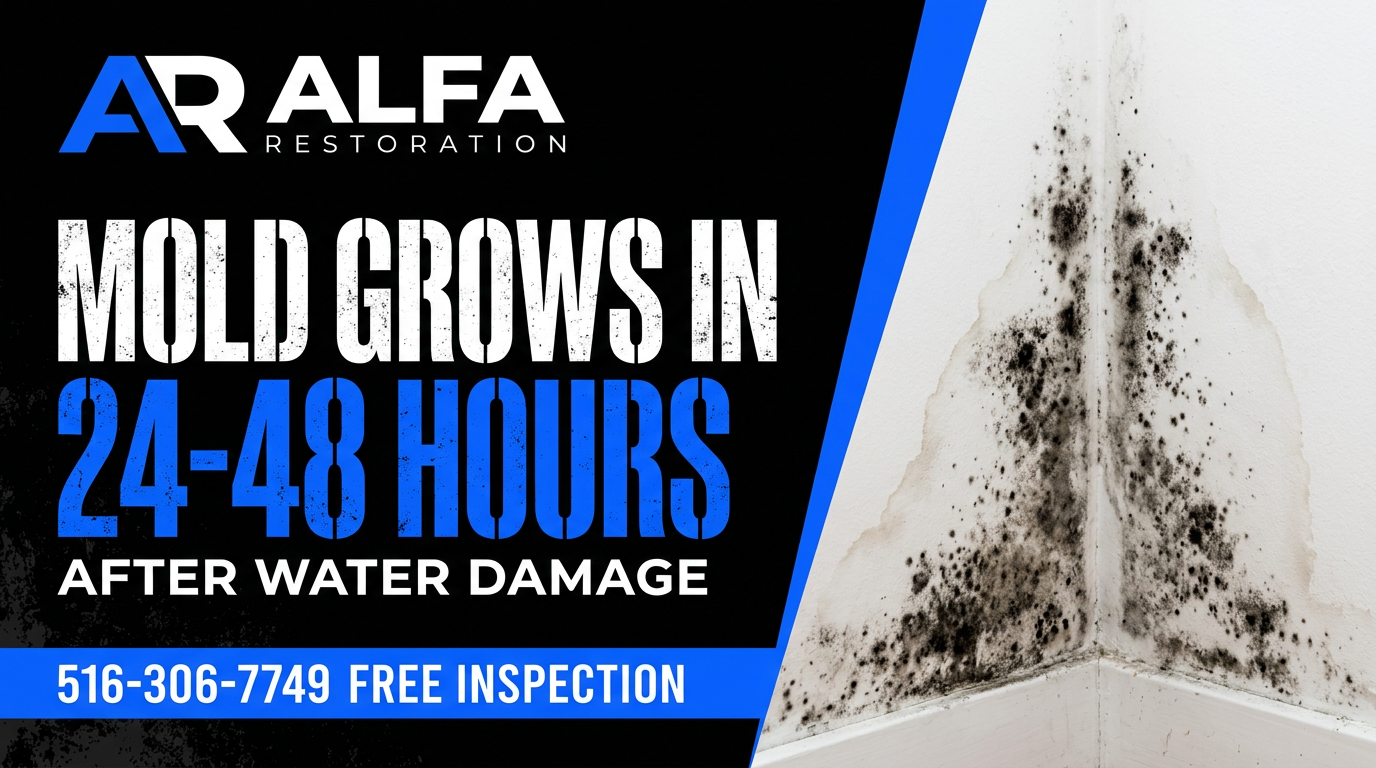
Mold can begin growing on wet surfaces within 24 to 48 hours of water damage. In Long Island's humid coastal climate — where summer humidity routinely exceeds 70% and basements stay damp year-round — that timeline is often even shorter. By day three, mold colonies are visible. By day seven, the spores have spread through your HVAC system to rooms that never got wet. By week two, you're looking at a mold remediation project on top of your original water damage repair.
Here's exactly what happens hour by hour after water damage on Long Island, when professional intervention is critical, and what you should do right now if you're staring at standing water.
The Mold Growth Timeline After Water Damage
Mold spores exist in every home on Long Island — in the air, on surfaces, on your clothes, in your HVAC system. They're harmless until they find moisture. The moment water saturates drywall, carpet, or wood, those spores activate.
Hour 0–24: Spore Activation. Mold spores absorb moisture and begin germinating. You won't see anything yet, but the biological process is already underway. Drywall and wood absorb water deep into their cores. Carpet padding becomes a mold breeding ground.
Hour 24–48: Initial Growth. Microscopic mold filaments (hyphae) start extending. This is the EPA's documented threshold — within 24 to 48 hours, mold growth is officially underway. You may notice a faint musty smell.
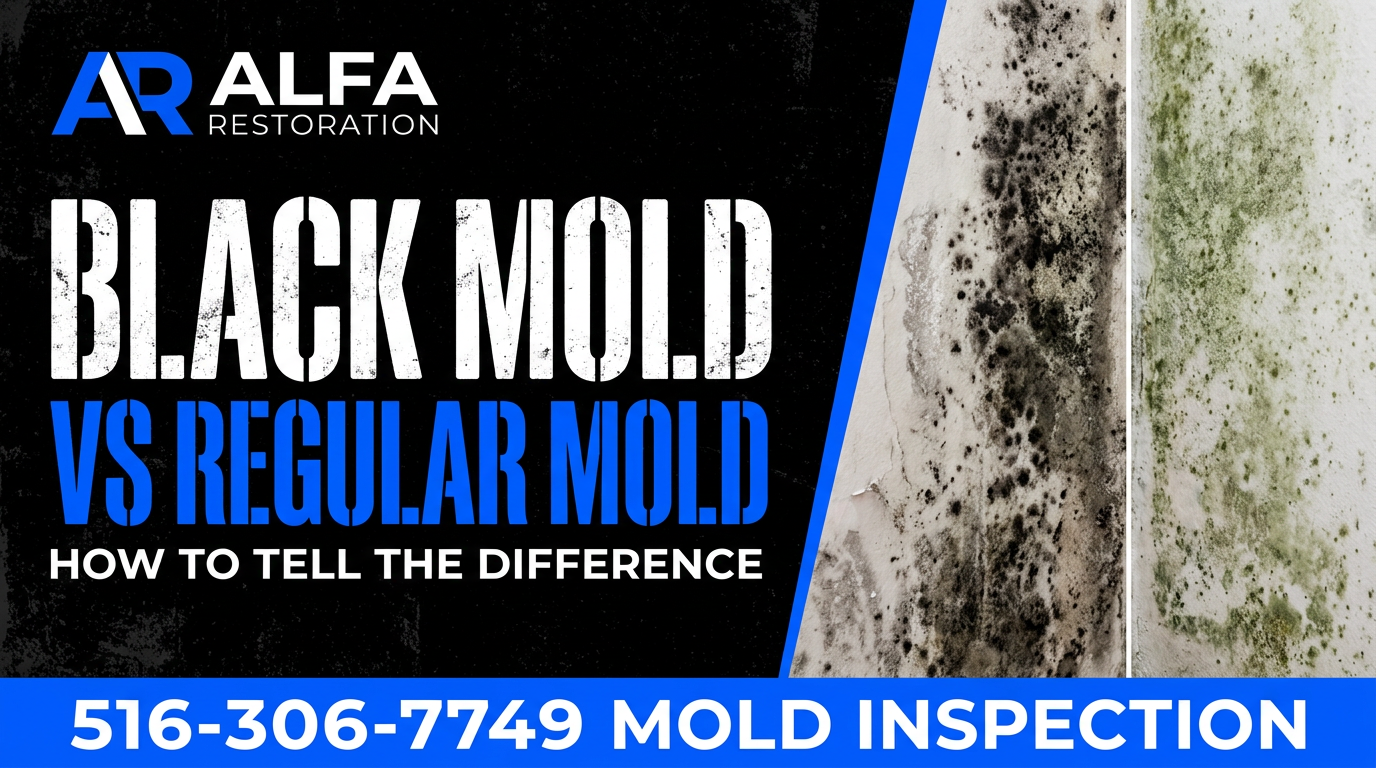
Day 3–7: Visible Colonies. Mold becomes visible to the naked eye. Black, green, or white spots appear on drywall, baseboards, and behind furniture. Spores are now actively reproducing and releasing into the air.
Day 7–14: Spreading. Mold colonies expand across surfaces and through the HVAC system. Spores travel to dry rooms, where they wait for any moisture to start new colonies. The musty smell intensifies.
Week 2–4: Major Contamination. Without remediation, mold has now spread through wall cavities, insulation, subfloors, and ductwork. Health symptoms appear in occupants — coughing, sinus issues, headaches, allergic reactions.
Month 1+: Structural and Health Damage. Mold compromises drywall, wood framing, and insulation. Toxic black mold (Stachybotrys) may establish itself in chronically wet areas. Remediation now requires demolition, full PPE, and air quality testing.
Why Long Island Mold Grows Faster Than the National Average
Long Island's geography is uniquely favorable to mold growth:
- Coastal humidity — average summer dew points 65°F+ across Nassau and Suffolk
- High water tables — South Shore communities like Freeport, Lindenhurst, and Long Beach have chronic basement moisture even without flooding
- Aging housing stock — many Long Island homes built before 1970 lack proper vapor barriers
- Storm exposure — every nor'easter and hurricane introduces moisture that lingers for weeks
- Salt air — accelerates corrosion and creates microclimates favorable to mold
Translation: the 24–48 hour mold growth window the EPA documents nationally? On Long Island, in summer, in a humid basement, mold can establish within 18–24 hours.
Warning Signs Mold Is Already Growing
After water damage, watch for these signals:
- Musty, earthy smell — the #1 indicator of active mold growth
- Black, green, or white spots on walls, ceilings, baseboards, or behind furniture
- Discolored drywall — yellowing or staining that wasn't there before
- Warped or bubbling paint — moisture trapped behind paint feeds mold
- Increased allergy symptoms — sneezing, coughing, headaches, or eye irritation when at home
- Visible water stains on ceilings or walls — mold is almost certainly behind them
If you're seeing any of these within a week of water damage, don't wait. Call a Long Island mold remediation specialist immediately.
What to Do in the First 48 Hours After Water Damage
The first two days determine whether you're dealing with water damage or water damage plus mold remediation. Stop the water source. Document everything for insurance with photos and video. Remove standing water within 24 hours with a wet/dry vac, pumps, or — if it's significant — call a professional immediately. Start drying with dehumidifiers and fans; industrial-grade equipment dries 10x faster than household fans. Remove wet carpet and padding. Pull baseboards and check wall cavities. And call a professional within 48 hours, even if the water looks gone — hidden moisture in framing, insulation, and subfloors will breed mold without industrial drying.
When DIY Drying Isn't Enough
Most homeowners underestimate how much water saturates the materials in their home. A small basement leak can soak 50+ pounds of water into drywall, framing, insulation, and subfloor. Household fans and dehumidifiers can't remove that moisture fast enough to beat the mold clock.
Professional water damage restoration uses truck-mounted extractors that remove water at 100+ gallons per minute, LGR (Low Grain Refrigerant) dehumidifiers, high-velocity air movers, moisture meters and thermal imaging to find hidden water in walls, and EPA-registered antimicrobial treatments to kill mold spores before they can germinate.
If your water damage involved more than a small spill, professional intervention within 24–48 hours is the difference between a $3,000 cleanup and a $15,000 mold remediation project.
How Alfa Restorations Stops Mold Before It Starts
At Alfa Restorations, our Long Island water damage restoration process always includes mold prevention. Within 30 minutes of your call, our certified crew arrives with industrial extraction equipment, LGR dehumidifiers, and EPA-registered antimicrobials. We dry your property to IICRC S500 standards — typically within 3–5 days — and apply preventive antimicrobial treatment to stop mold before it can establish. If mold is already growing, we're a New York-licensed mold remediation contractor with full containment, HEPA filtration, and post-remediation verification testing.
Frequently Asked Questions
Can mold grow in 24 hours? Yes. Under ideal conditions — warm temperatures, high humidity, and saturated organic materials like drywall or wood — mold spores activate within 24 hours. Long Island's humid climate often accelerates this timeline.
How do I know if mold is growing inside my walls? Musty odors, visible staining, peeling paint, and unexplained allergy symptoms are common signs. A professional moisture inspection with thermal imaging confirms hidden mold.
Will my insurance cover mold caused by water damage? If the water damage is from a covered event (burst pipe, sudden leak, storm), the resulting mold is typically covered. Long-term humidity-driven mold usually isn't. Documentation and timing matter.
How long does it take to remove mold once it starts growing? Small mold removal: 1–3 days. Moderate (basement, multiple areas): 4–7 days. Large or whole-home: 1–3 weeks.
Can I clean mold myself? For areas under 10 square feet of non-toxic mold on hard surfaces, yes — with proper PPE and EPA-registered cleaners. New York State Labor Law Article 32 requires a licensed contractor for any mold project over 10 square feet.
Don't let water damage become a mold project. Call Alfa Restorations at (516) 306-7749 — 24/7 emergency response across Long Island.