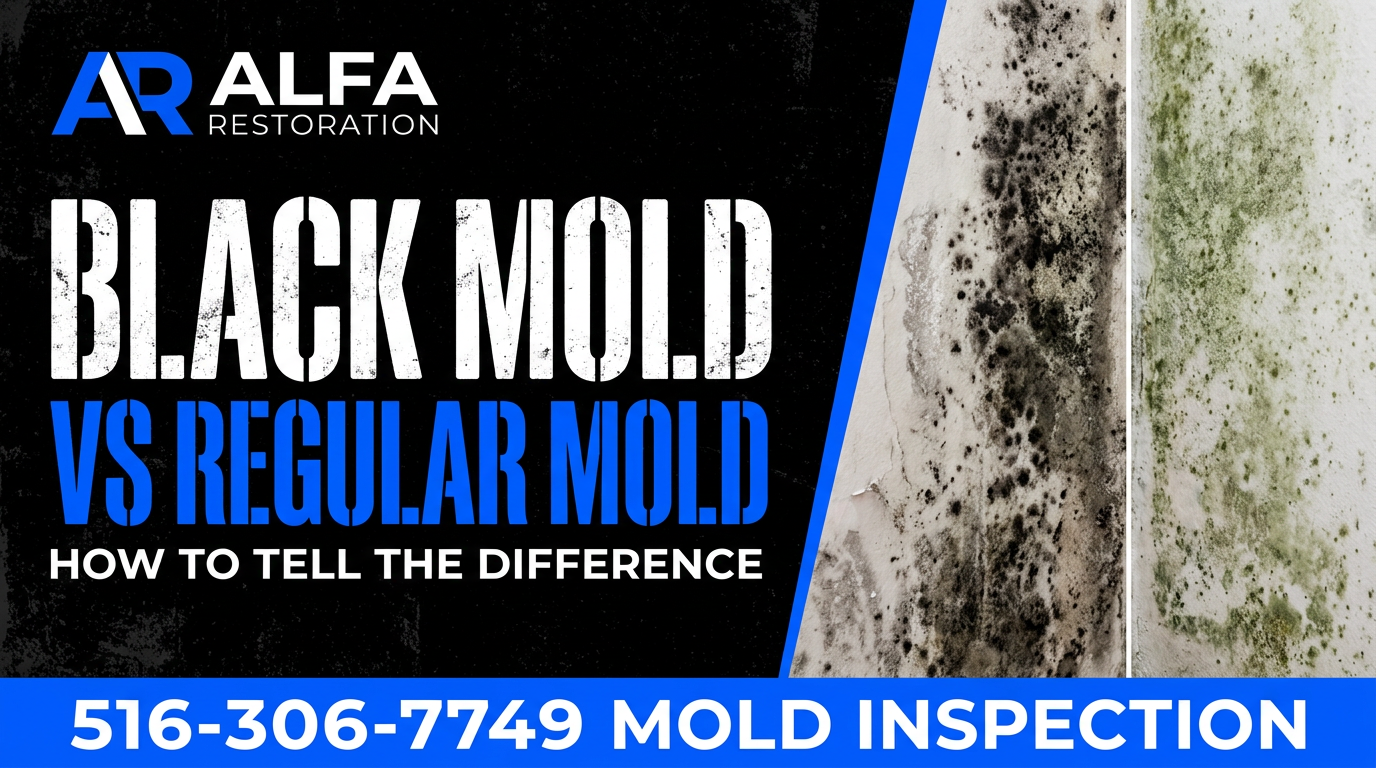
Black Mold vs. Regular Mold — How to Tell the Difference
You spotted a dark patch on your basement wall, behind the toilet, or under the kitchen sink. Your first thought: is this toxic black mold?
It's a fair question — but here's what most Long Island homeowners don't realize. "Black mold" isn't just one thing. It's a popular term for a specific species (Stachybotrys chartarum) that produces toxins, but plenty of dark molds aren't Stachybotrys, and several non-black molds are actually more dangerous.
This guide explains how to tell the difference, when DIY cleanup is safe, and when it's time to call a licensed Long Island mold remediation contractor.
What Is "Black Mold," Really?
When people say "black mold," they almost always mean Stachybotrys chartarum — a species that produces mycotoxins linked to chronic respiratory issues, neurological symptoms, and immune suppression. Key Stachybotrys characteristics: slimy, wet, dark green-to-black appearance; grows on cellulose-rich materials (drywall paper, wood, ceiling tiles); requires sustained moisture to grow (not just one wet incident); produces a strong, musty, earthy odor; and is common in chronically wet basements, behind walls with hidden leaks, and in flooded areas. If you have Stachybotrys, do not disturb it. Spore disturbance releases mycotoxins into your air. Call a professional immediately.
Common Molds That LOOK Like Black Mold But Aren't
Cladosporium — olive-green to black mold that grows on fabrics, carpets, wood, and HVAC systems. Less toxic than Stachybotrys but still triggers asthma and allergies. Aspergillus niger — black mold that's actually one of the most common indoor molds. Causes allergies and respiratory infections. Looks similar to Stachybotrys but is dry and powdery rather than slimy. Alternaria — dark brown-black mold common in damp showers, bathtubs, and around windows. Major allergen. Mildew (early stage) — often confused with black mold. Mildew is typically white, gray, or yellow when forming and only turns darker over time.
Dangerous Molds That AREN'T Black
Don't assume non-black molds are safe. Penicillium — blue-green mold, common after water damage, triggers severe allergies and respiratory infections. Fusarium — pink, white, or red mold. Can cause skin and eye infections. Chaetomium — gray-to-brown mold found in chronically water-damaged drywall. Produces toxins similar to Stachybotrys. Aspergillus (other species) — green, yellow, or white. Some species are highly toxic and infectious. Trichoderma — white-to-green mold. Some species produce mycotoxins. The lesson: color alone doesn't determine risk. Lab testing does.
How to Tell if You Have Black Mold
Visual identification by homeowners is unreliable — even mold professionals use lab testing for definitive identification. Strong indicators of Stachybotrys: slimy wet appearance (not powdery or fuzzy), dark green to black color, located on chronically wet drywall/wood/ceiling tile, strong musty odor, multiple square feet of growth, history of water damage in the area. Less likely Stachybotrys: powdery or fuzzy texture, green/brown/white/yellow coloration, located on tile grout or painted surfaces, small spot under a few square inches, no water damage history. The only way to know for certain: professional mold testing with lab analysis.
Health Symptoms That Suggest Toxic Mold Exposure
Both Stachybotrys and other toxic molds can cause persistent cough or wheezing, sinus infections that don't resolve, headaches and fatigue, skin rashes, eye irritation and burning, asthma flare-ups, memory issues and brain fog (rare, in chronic cases), and worsening symptoms when home with improvement when away. If your family has unexplained chronic symptoms that improve when you're away from the house, get a mold inspection immediately.
When You Can Clean Mold Yourself
Per EPA guidelines, you can clean mold yourself if the affected area is under 10 square feet, the mold is on non-porous surfaces (tile, glass, sealed metal), there's no extensive water damage, no one in the household has compromised immunity, asthma, or chronic respiratory issues, and you wear proper PPE (N95 mask, gloves, eye protection). For DIY cleanup: use EPA-registered mold cleaner or 1:10 bleach-water solution, scrub thoroughly then dry completely, bag and dispose of contaminated materials, and run a HEPA air purifier during and after cleaning.
When to Call a Professional
Call a NY-licensed mold remediation contractor if the affected area is over 10 square feet (NY State Labor Law Article 32 requires it), mold is on porous materials (drywall, insulation, carpet, ceiling tile), you have active or recent water damage, the mold is in HVAC ductwork, anyone in the home has respiratory issues, asthma, immune compromise, or is an infant or elderly resident, the mold is toxic black mold (or you suspect it is), or the musty smell persists despite visible cleanup.
Frequently Asked Questions
Is all dark-colored mold toxic black mold? No. Many dark molds are non-toxic Cladosporium or Aspergillus. Lab testing is the only way to confirm Stachybotrys.
Can I test for mold myself? Home mold test kits exist but produce unreliable results. Professional air sampling and lab analysis ($300–$700 on Long Island) gives you accurate species identification.
What's the smell of black mold? Strong, musty, earthy — sometimes described as "wet basement" or "old book" smell.
Can black mold come back after remediation? Only if the moisture source isn't fixed. Professional remediation includes finding and addressing the root cause.
Does insurance cover mold remediation? If the underlying cause is a covered water event (burst pipe, sudden leak), often yes. Long-term humidity-driven mold typically isn't covered.
Found mold? Get a free Long Island mold inspection. Call Alfa Restorations at (516) 306-7749.