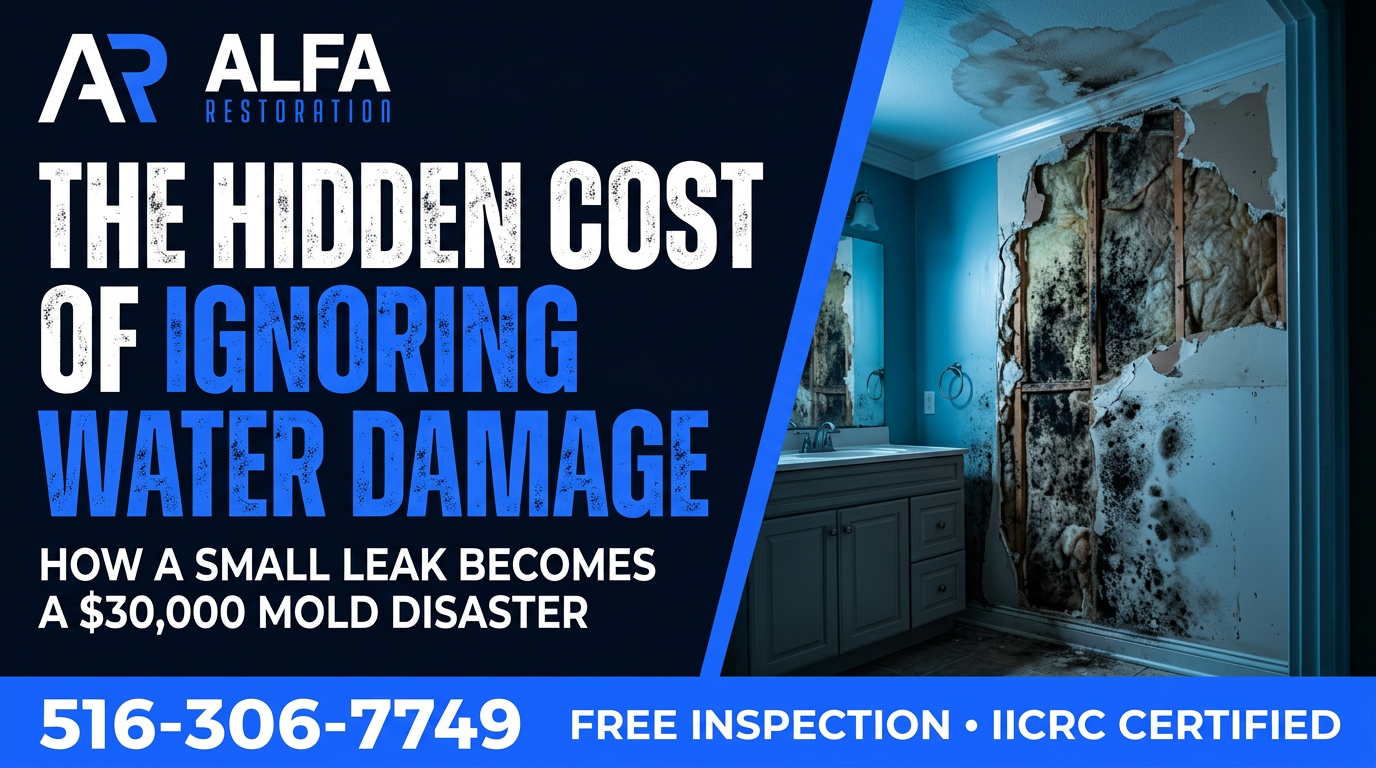
Ceiling Water Damage — What's Really Happening Above Your Head
A water stain on the ceiling is one of the most common reasons homeowners call us — and one of the most commonly misdiagnosed. The visible stain is rarely where the leak is, the damage almost always extends further than the discoloration suggests, and the urgency is usually higher than homeowners assume.
Here's how to read what your ceiling is actually telling you, and what to do about it.
The Leak Is Probably Not Where You Think
Water follows gravity and the path of least resistance, which means a stain on your ceiling is almost never directly below the source. Water can travel along the top of a ceiling, run down a joist, drop through a light fixture or vent, and pool in a different room entirely before showing up on a finished surface.
This is why DIY repairs often fail. A homeowner sees a stain, assumes the source is the pipe directly above, fixes that pipe, and watches a new stain appear two weeks later. The original source was somewhere else entirely, and it kept leaking the whole time.
Finding the actual source requires moisture mapping and sometimes thermal imaging — tools that detect where water has traveled, not just where it's visible.
The Three Most Common Sources
A roof leak is the most common cause of ceiling water damage on a top floor or under an attic. These often appear after heavy rain or snow melt and can be intermittent — drying out between events, then reappearing. Don't assume an intermittent leak is minor. Wet attic insulation between events is still wet, and mold doesn't care whether the source is active right now.
A plumbing leak from a bathroom, kitchen, or laundry room above is the most common cause on lower floors. These are sometimes dramatic — a clear drip during use — and sometimes subtle, with slow leaks behind walls that only show up on the ceiling below after weeks of accumulation.
HVAC condensation leaks happen when an air conditioner's condensate drain line clogs or a unit in the attic develops a problem. These are seasonal — appearing during cooling season — and often dismissed as roof problems because they show up on top-floor ceilings.
The Stain Is the Smallest Part of the Problem
A stain the size of a dinner plate usually corresponds to a wet area several times larger above it. The drywall has absorbed water across a wider zone than the visible discoloration shows. The insulation above the drywall is wet, often across an even wider area. The framing is damp, the ceiling joists are damp, and the space above is now a humidity-controlled mold incubator.
Pressing on a stained ceiling tells you something important. If it feels soft, spongy, or sags under light pressure, the drywall is saturated and at risk of collapse. A saturated ceiling panel can release dozens of pounds of water at once when it fails, taking the panel with it.
If you can see sagging, bulging, or active dripping, the situation is urgent. Move valuables out of the area, place a container to catch water, and consider puncturing the lowest point of the bulge with a screwdriver to release the water in a controlled way. Counterintuitive as it sounds, controlled drainage prevents the much bigger mess of an uncontrolled collapse.
Why You Can't Just Paint Over It
The most common DIY response to a ceiling stain is to paint over it once it dries. This is a mistake for three reasons.
First, regular paint won't seal the stain. It will bleed through within weeks. You need a stain-blocking primer at minimum.
Second, painting hides the symptom without addressing the underlying moisture damage. The drywall behind the paint is still compromised. Wet drywall loses structural integrity even after it dries, and it's a permanent food source for mold once any humidity returns.
Third, painting eliminates your evidence. If the underlying problem turns into a major issue later — and it usually does — you've made the original damage harder to document for insurance.
The Right Response
When you notice a ceiling stain, call a restoration company before you do anything else. A proper inspection involves locating the actual source (not just the assumed source), measuring moisture levels in the affected materials, identifying the full extent of wet area beyond the visible stain, and assessing whether materials can be dried in place or need to be removed.
In many cases, fast response means we can save the ceiling and the materials above. Slow response usually means demolition and replacement.
[CALL ALFA RESTORATION FOR CEILING DAMAGE INSPECTION]
---
Don't wait to find out how much worse it can get. Call Alfa Restorations at (516) 306-7749 — 24/7 emergency response across Long Island.