The Hidden Cost of Ignoring Water Damage: How a Small Leak Becomes a $30,000 Mold Disaster
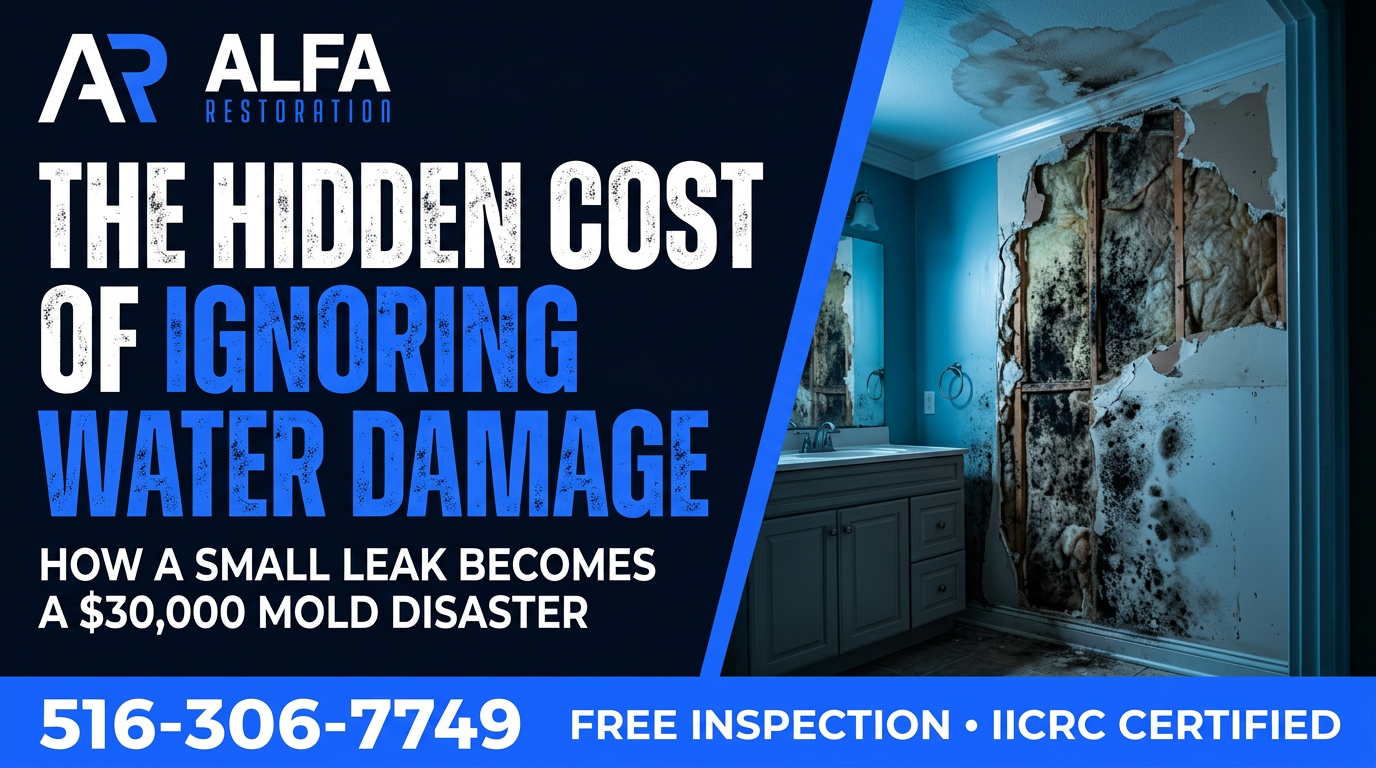
The most expensive water damage jobs we handle at Alfa Restorations almost never start as emergencies. They start as a slow drip under a sink, a faint musty smell in a guest bathroom, a small brown stain on a ceiling that the homeowner planned to "get to eventually." Six months later, we're tearing out drywall, subflooring, and entire vanity cabinets — and the homeowner is staring at a five-figure bill that a $200 plumber visit would have prevented.
Here's what's actually happening behind your walls when you ignore the early signs of water damage, and why time is the most expensive variable in this entire equation.
The 48-Hour Rule No One Tells You About
Mold spores exist everywhere. They float in the air, they sit on surfaces, they're in your home right now. What they're missing is moisture. Give them a damp surface and a temperature above 60 degrees, and they begin colonizing within 24 to 48 hours.
A slow leak under your sink keeps that area damp permanently. The cabinet floor, the back wall, the surrounding subflooring — all of it stays in the perfect mold-growing zone for weeks or months before you notice anything. By the time you see the black spots or smell the mildew, the colony has been growing and spreading invisibly the entire time.
This is the math that catches homeowners off guard. A plumbing repair to fix the original leak might be a few hundred dollars. The water damage restoration to dry out and rebuild the affected materials is a few thousand. But if mold has set in and spread into wall cavities, insulation, or HVAC systems, you've now added remediation, containment, air quality testing, and rebuild costs that can easily exceed $20,000 to $30,000.
The Warning Signs Most Homeowners Dismiss
Hidden water damage rarely announces itself. It whispers. Here's what to listen for.
A musty or earthy smell that comes and goes, especially in basements, bathrooms, or near exterior walls, is almost always the first sign of mold growth somewhere you can't see. Your nose detects mold long before your eyes do.
Discoloration on walls or ceilings — yellow stains, brown rings, or darker patches — means water has been moving through that material. Even if the stain is dry now, the damage behind it may not be.
Paint that is bubbling, peeling, or cracking in spots, especially on bathroom ceilings or near windows, indicates moisture pushing out from behind the surface.
Warped, buckled, or cupping hardwood floors mean water has reached the subfloor. By the time the surface warps, the materials underneath have been wet for a while.
A spike in your water bill with no obvious cause is one of the clearest signs of a hidden leak. Even a tiny pinhole leak in a pressurized pipe can dump hundreds of gallons into your wall cavity over a month.
Allergies, headaches, or persistent respiratory symptoms that get worse at home and better when you leave are a serious warning sign. Mold-related health issues are real, and they're often the reason a homeowner finally calls us.
Why "Wait and See" Always Costs More
We understand the temptation to wait. Restoration feels expensive, the damage doesn't look that bad yet, and life is busy. But every week that water sits in a wall, the scope of work grows.
A leak caught in week one might mean drying out a small section of drywall and resealing a pipe. Caught in month one, you're replacing drywall, insulation, and possibly subflooring. Caught in month six, you're dealing with mold remediation, structural drying of joists, possibly rerouting electrical that's been compromised by moisture, and replacing flooring across multiple rooms because the water traveled.
The same is true for insurance. Most homeowners policies cover sudden and accidental water damage. They specifically exclude long-term leaks and gradual damage. That means a problem you knew about and ignored may not be covered at all, even if the original cause would have been. Acting fast doesn't just save you money on the repair — it preserves your insurance claim.
What a Professional Inspection Actually Finds
When you call Alfa Restorations for an inspection, we don't just look at what you've already noticed. We use moisture meters to test materials that look dry but aren't. We use thermal imaging cameras that detect temperature differences caused by moisture inside walls. We check the spaces homeowners can't easily see — under sinks and appliances, behind toilets, around water heaters, in attics and crawl spaces, along the exterior foundation.
In most cases where a homeowner calls about one small concern, we find at least one additional issue they didn't know about. Sometimes it's minor. Sometimes it's the actual source of the problem they were noticing.
When to Call
If you've noticed any of the warning signs above, call us for an inspection before you assume it's nothing. If you've recently had a plumbing leak, even a small one that's been "fixed," call us to verify there's no remaining moisture in surrounding materials. If you've bought a home recently and want peace of mind, call us before problems develop.
The cheapest restoration job is the one we catch early. Schedule a free inspection at (516) 306-7749.