How to Prevent Frozen Pipes on Long Island This Winter
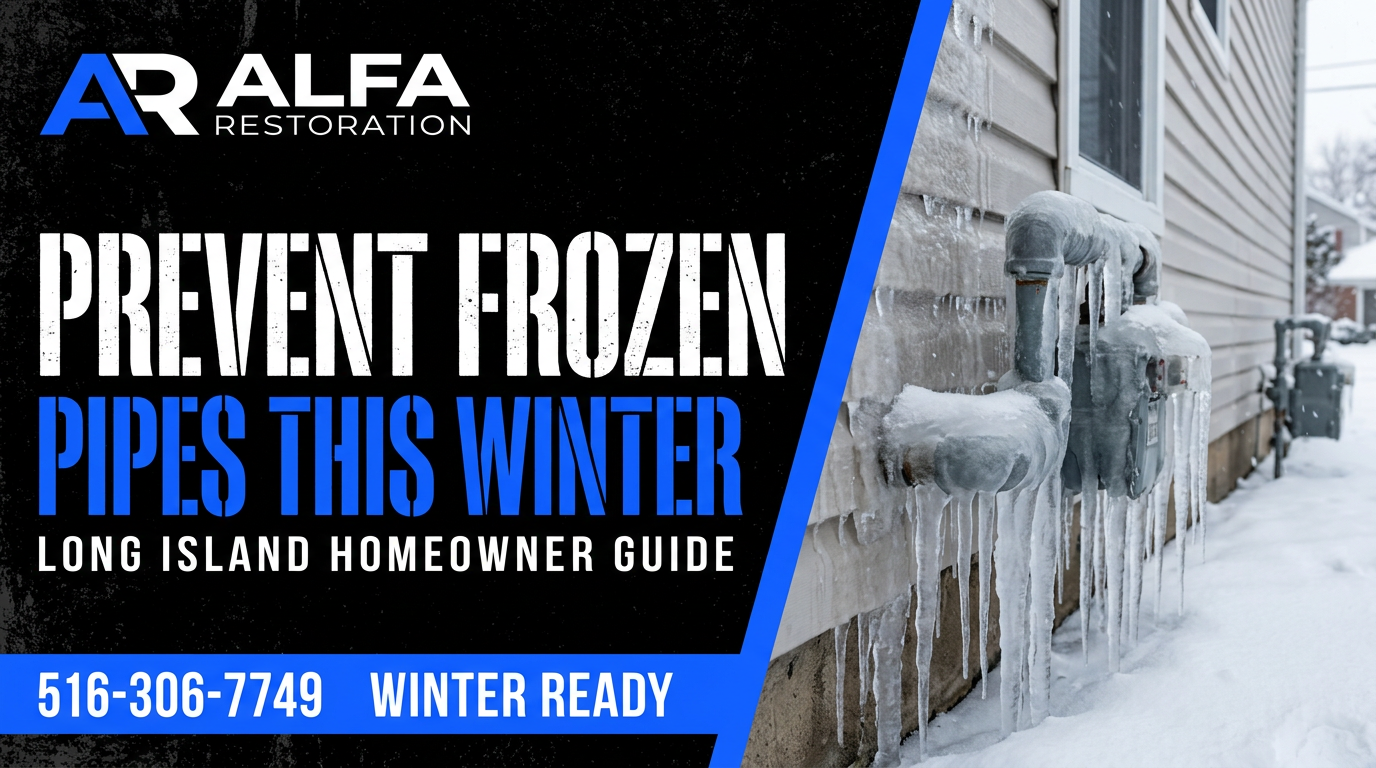
Every winter, Long Island temperatures drop into the teens and single digits — and every winter, thousands of Nassau and Suffolk County homeowners wake up to burst pipes, flooded basements, and water damage repair bills averaging $5,000–$15,000.
The frustrating part? Almost every burst pipe is preventable.
This guide covers exactly what Long Island homeowners need to do before, during, and after a freeze to keep pipes from bursting — and what to do immediately if you suspect a pipe has frozen.
Why Long Island Pipes Freeze (And Why They Burst)
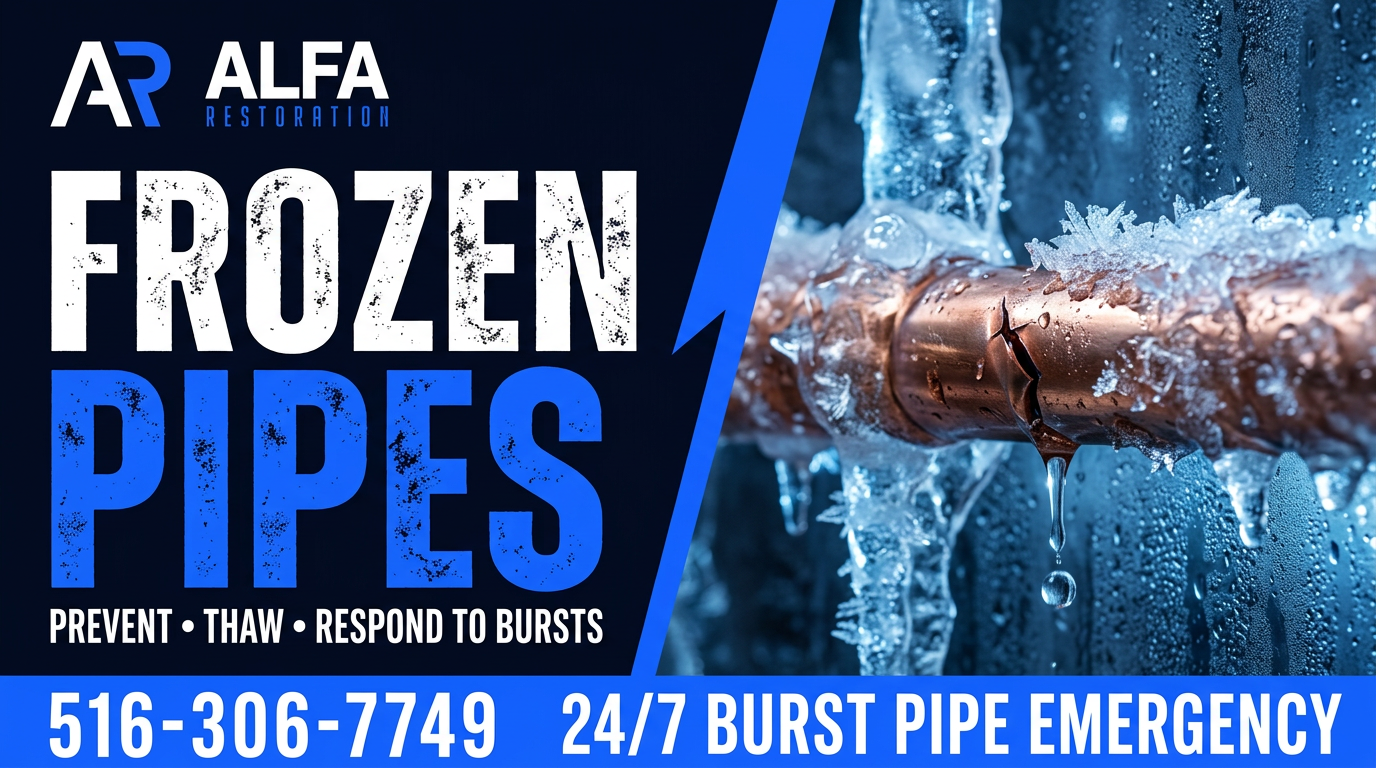
Pipes freeze when the water inside reaches 32°F. That alone doesn't cause damage — frozen pipes are inconvenient, but they're not the disaster. The disaster is what happens next: as ice forms and expands, pressure builds inside the pipe behind the ice. Eventually, the pipe ruptures — often somewhere unrelated to where the freeze occurred. When the pipe thaws (sometimes hours later, sometimes days), water gushes out at full pressure into your walls, ceilings, or basement.
Long Island pipes are especially vulnerable because many homes have plumbing in unheated basements, crawl spaces, and exterior walls; older homes (pre-1970) often have copper pipes in poorly insulated locations; South Shore homes face wind chill from the Atlantic; and vacation homes in the Hamptons often sit unheated during cold snaps.
The 7 Most Vulnerable Spots in Your Long Island Home
1. Basement plumbing near foundation walls. Cold air infiltrates basement perimeters. Pipes within 12 inches of foundation walls freeze first. 2. Crawl space pipes. Crawl spaces drop below freezing fast. 3. Pipes in exterior walls — kitchen sinks, bathroom plumbing, and laundry rooms. 4. Garage plumbing — hose bibs, garage sinks, pipes through garage ceilings. 5. Attic plumbing — some Long Island homes have plumbing or sprinkler lines in unheated attics. 6. Outdoor hose bibs — any outdoor faucet that wasn't winterized. 7. Pool house and detached garage plumbing — frequently forgotten until they burst.
Prevention Steps to Take Before Winter
Do these in October or November every year. Insulate vulnerable pipes with foam pipe insulation ($1–$5 per linear foot at any Long Island hardware store). Install on every exposed pipe in basements, crawl spaces, garages, and exterior walls. Disconnect and drain outdoor hoses. Remove all hoses from outdoor spigots, drain them, store indoors, and install insulated hose bib covers. Shut off outdoor water supply lines — many Long Island homes have separate shutoffs. Seal air leaks around foundation walls, dryer vents, sill plates, and exterior penetrations. Insulate crawl spaces and unheated basements. Check heat tape on vulnerable pipes (UL listed only). Service your heating system — annual service every fall is essential.
Prevention Steps During a Freeze Warning
When the National Weather Service issues a freeze warning: Keep heat at 55°F minimum — even when away. Do not lower the thermostat below 55°F when traveling. Open cabinet doors under sinks so warm room air reaches pipes in exterior walls. Let faucets drip — a slow drip on the faucet farthest from your main water line keeps water moving and relieves pressure if ice does form. Open interior doors to help heat circulate. Disconnect garden hoses if you forgot earlier. Know where your main shutoff is.
What to Do If a Pipe Freezes
You suspect a frozen pipe if a faucet runs slowly or not at all on a cold morning, you hear unusual sounds in plumbing, there's frost visible on exposed pipes, or temperatures have been below 20°F for several hours.
Immediate action: Open the affected faucet — running water as the pipe thaws relieves pressure. Apply gentle heat to the frozen section — hair dryer, heating pad, warm towels. Never use an open flame, propane torch, or kerosene heater — these cause house fires and steam explosions. Heat from the faucet end backward — let melted water flow out. Check other faucets — if one pipe froze, others probably did too. If the pipe has already burst: shut off the main water valve immediately and call a Long Island water damage company.
When the Pipe Bursts Anyway
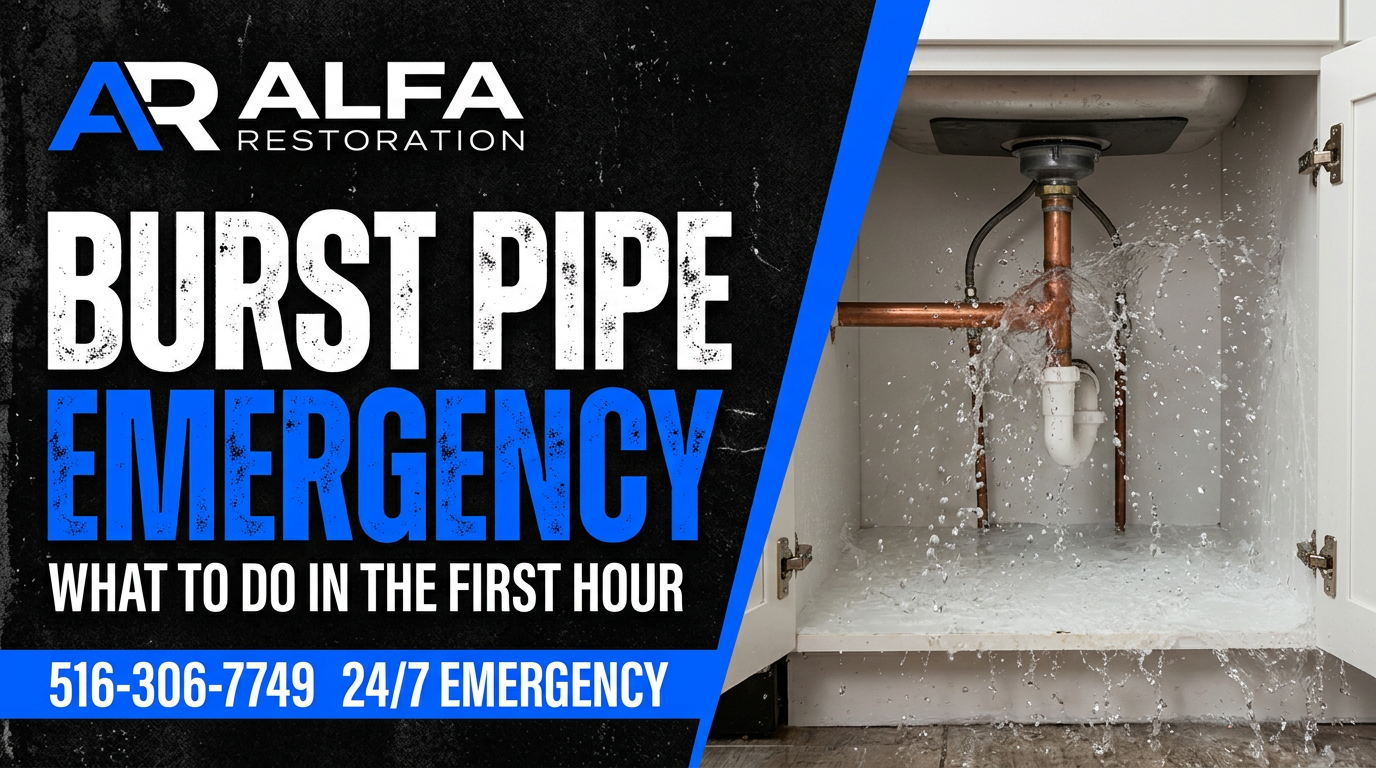
Even with prevention, pipes still burst. When they do: shut off the main water valve immediately, shut off electricity to affected areas if water is near outlets, document with photos and video before cleanup, call a Long Island water damage restoration company (we respond in 30 minutes), and call your insurance carrier (burst pipes are covered under standard NY homeowners policies).
Frequently Asked Questions
At what temperature do pipes freeze on Long Island? Sustained outdoor temperatures of 20°F or below for several hours can freeze pipes in unheated areas. Wind chill matters.
Should I leave the heat on at 55°F even when on vacation? Yes. The cost of running heat at 55°F for a week is far less than a single burst pipe repair.
How long does it take a pipe to freeze? In an unheated, exposed location at 20°F or below, a pipe can freeze in 4–8 hours.
Will my insurance cover a frozen pipe burst? Yes, standard NY homeowners insurance covers sudden burst pipes — including from freezing — provided the home was reasonably heated. Vacation homes left unheated may be excluded.
Are PEX pipes more freeze-resistant than copper? PEX has more flex than copper and sometimes survives a freeze without bursting, but it's not freeze-proof. Insulation and heat are still essential.
Pipe burst already? Don't wait. Call Alfa Restorations at (516) 306-7749 — 30-minute response across Long Island.