Smoke Damage After a Kitchen Fire — Why You Can't Just Paint Over It
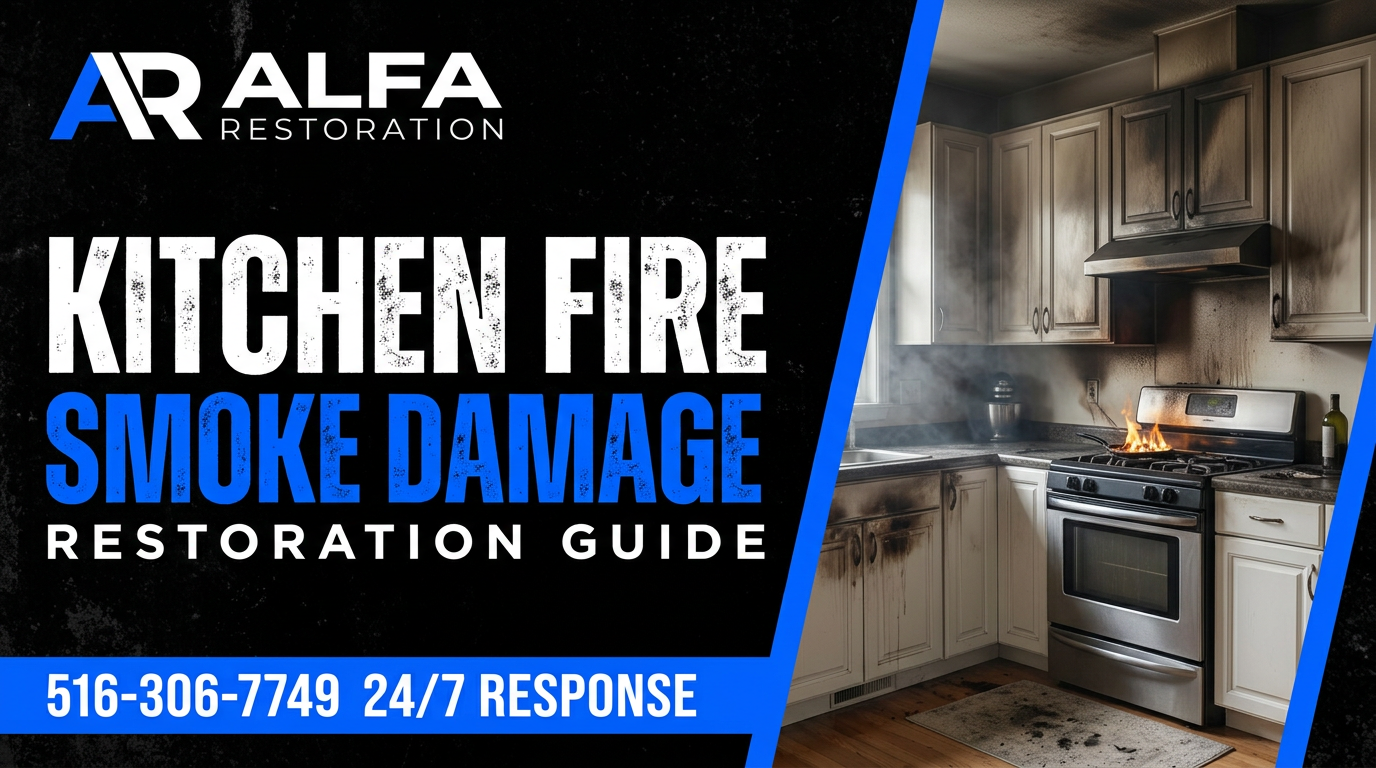
The fire is out. The fire department has gone home. The kitchen is a mess but the structure is intact. You're tempted to clean up the visible damage, slap a coat of paint on the walls, and move on with your life.
Don't do it.
Painting over smoke damage is one of the most common — and most expensive — mistakes Long Island homeowners make after a kitchen fire. Within 30 days, the smoke smell returns. Within 90 days, the paint discolors. Within six months, you're paying a Long Island fire damage restoration company to redo everything you tried to fix yourself.
Here's why painting over smoke damage doesn't work, and what actually does.
What Smoke Damage Really Is
Most homeowners think smoke damage is the dark staining on walls and ceilings. That's only the visible 10%.
The other 90% is invisible: smoke odor molecules bonded into drywall paper, wood grain, fabric fibers, and grout; acidic soot residue that continues etching surfaces for weeks if not removed; oil-based films on cabinets, counters, fixtures, and electronics; HVAC contamination as smoke spread through ductwork to every room; insulation saturation in attic and wall insulation; and air quality contamination from toxins in burned synthetic materials.
Painting over visible smoke staining locks the contamination underneath the paint. The odor still escapes. The acidic residue keeps eating finishes from below. And within weeks, you're worse off than when you started.
Why Paint Alone Fails
Three reasons. Paint doesn't block odor molecules. Smoke odor molecules are smaller than paint particles. They pass through standard latex and oil-based paints over time. The smell escapes the wall and re-contaminates your home. Acidic soot continues reacting below the paint. The acidic residue from burned plastics, foods, and synthetics keeps reacting with materials underneath the paint, causing yellowing, bubbling, and eventual paint failure. The source is still there. Painting walls doesn't address smoke damage in your HVAC, insulation, fabric, cabinets, or electronics. The contamination keeps reintroducing itself to the painted walls.
The 4 Types of Kitchen Fire Smoke
Knowing the type of smoke is critical because each type requires different cleanup. 1. Protein smoke (grease fires) — nearly invisible film with extremely strong odor. Discolors paint and varnish. Most kitchen fires fall here. Almost impossible to remove with standard cleaning. 2. Wet smoke (smoldering plastics, synthetic materials) — sticky, smeary residue. Strong pungent odor. Hardest to clean. 3. Dry smoke (burning wood, paper, wooden cabinets) — powdery residue. Easier to remove from hard surfaces but spreads further through HVAC. 4. Fuel/oil smoke (adjacent furnace puff back or stovetop oil fire) — greasy, oil-based soot that requires specialty cleaning. A professional restoration company identifies the smoke type first, then matches the cleaning protocol.
What Actually Works for Kitchen Fire Smoke Damage
The proper sequence (none of which is optional): Step 1 — Containment and HVAC lockout. Shut down the HVAC system to stop further smoke spread. Seal off the affected area. Step 2 — Dry cleaning. HEPA vacuums and chemical sponges remove loose soot before any wet cleaning. Wet cleaning first sets the smoke residue permanently. Step 3 — Wet cleaning with specialty solvents. Cleaners matched to the smoke type. Step 4 — Content cleaning. Cabinets, dishes, appliances, and personal items cleaned with appropriate techniques. Some items need ozone chamber treatment off-site. Step 5 — HVAC and duct cleaning. Every register, return, length of duct, and the evaporator coil cleaned thoroughly. Step 6 — Drywall sealing with stain-blocking primer (Kilz Premium or BIN Shellac) before any paint. This is the only way to lock smoke odor molecules into the wall permanently. Step 7 — Repaint. Standard paint applied over sealed drywall. Step 8 — Thermal fogging or ozone treatment. Final whole-home deodorization to neutralize odor molecules at the molecular level. Step 9 — Air quality verification.
How Long Does Kitchen Fire Smoke Cleanup Take?
Light kitchen fire (contained, single room): 3–7 days. Moderate kitchen fire (multiple rooms, HVAC contamination): 1–2 weeks. Severe kitchen fire (whole-home smoke, content cleaning, reconstruction): 3–8 weeks. Most homeowners insurance covers kitchen fire cleanup. We bill insurance directly.
Frequently Asked Questions
Can I paint over smoke damage if it's just a little staining? No — even small staining indicates wider invisible contamination. Always seal first with stain-blocking primer.
How much does kitchen fire smoke cleanup cost? $1,500–$8,000 for most kitchen fire smoke restoration on Long Island, depending on severity and HVAC involvement.
How long does smoke smell last without proper cleanup? Years. Smoke odor molecules don't dissipate naturally — they require active deodorization (ozone, thermal fogging, or hydroxyl).
Will insurance cover smoke damage from a small kitchen fire? Yes, almost always. Standard homeowners policies cover smoke damage even from minor contained fires.
Can I just air the house out by opening windows? It helps short-term but doesn't remove smoke contamination from materials. The smell returns when windows close.
Kitchen fire smoke damage on Long Island? Skip the DIY mistakes. Call Alfa at (516) 306-7749.