Why a Dehumidifier Isn't Enough — The Truth About DIY Water Damage Drying
After every water incident, homeowners ask the same question: can't I just rent a dehumidifier and dry this out myself? The honest answer is that for very small incidents, sometimes yes. For most situations, the math doesn't work — and understanding why prevents the much more expensive problem of an incomplete dry-out.
Here's what professional drying actually involves and why a single rental dehumidifier rarely solves the problem.
The Physics of Drying Wet Materials
Wet drywall, wet carpet padding, wet hardwood, and wet framing don't dry just because the air around them is dry. Drying is a process of moisture migration — water moves from inside the material to its surface, evaporates into the air, and the air carries it away.
For this to happen efficiently, three things need to be true at once. The air needs to be dry (low relative humidity), so it can absorb moisture from materials. Air needs to be moving across the wet surfaces, so saturated air gets replaced with dry air. And the temperature needs to be high enough that water moves quickly from inside materials to the surface.
A consumer dehumidifier handles the first part adequately for small spaces. It does nothing for the other two.
Why Air Movement Matters More Than Most People Realize
Stationary dry air sitting on top of a wet carpet doesn't pull moisture out efficiently. As the air closest to the surface picks up moisture, it becomes saturated and stops absorbing more. Without movement, the rest of the room's dry air can't reach the wet surface.
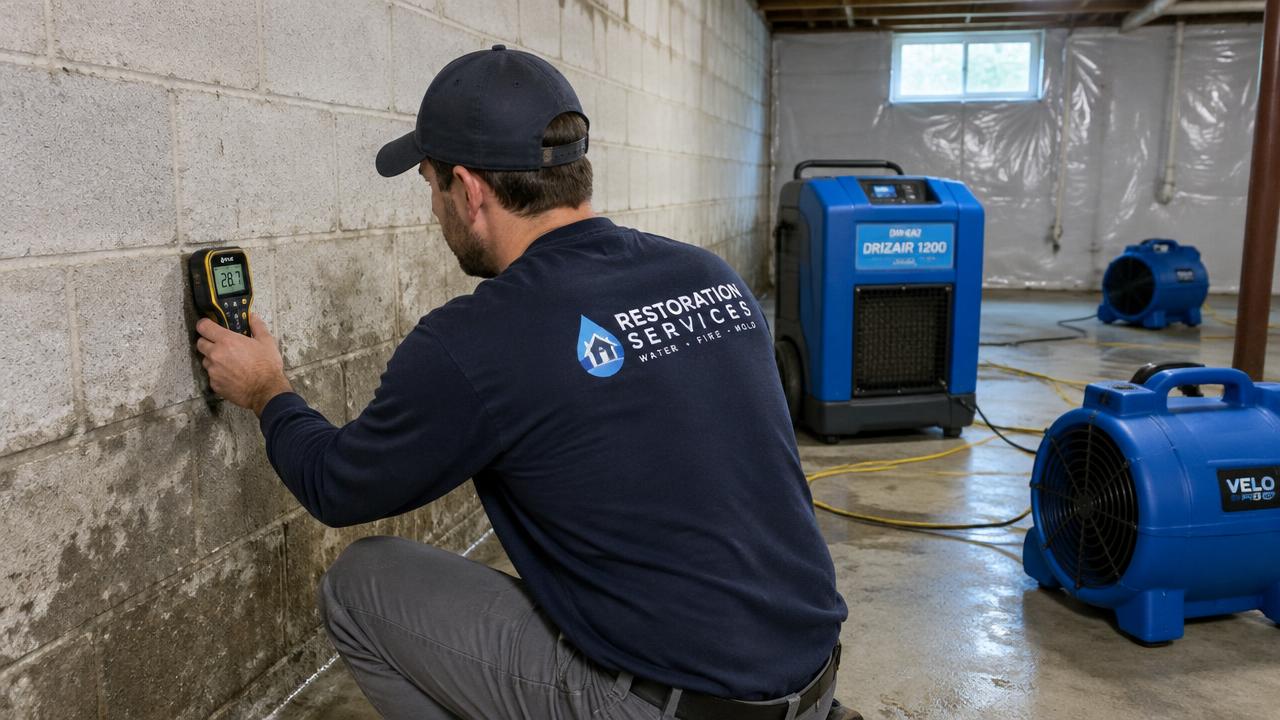
Professional drying uses high-velocity air movers — essentially industrial fans designed to move air rapidly across surfaces in a focused pattern. A typical residential job uses anywhere from 4 to 20 air movers depending on the affected area. A rental dehumidifier alone, no matter how powerful, doesn't replicate this.
This is why DIY drying often produces what looks like a dry surface while leaving the materials underneath still wet. The top inch of carpet dries, but the padding underneath stays saturated. The visible drywall dries, but the inside of the wall cavity doesn't.
The Capacity Problem
Consumer dehumidifiers are rated for spaces with normal humidity problems — not for active water damage scenarios. A typical 50-pint home dehumidifier removes about 50 pints of moisture per day under ideal conditions.
A finished basement that has been flooded contains a tremendous amount of water. The carpet padding alone in a 500 square foot room can hold 50 to 100 gallons of water once saturated. Drywall, framing, and subflooring add significantly more.
Industrial dehumidifiers used in professional restoration are rated at 100 to 240 pints per day, often run in multiples on the same job, and are designed specifically for drying water-damaged structures. They aren't available at hardware stores.
The Measurement Problem
Even if you had the right equipment, you wouldn't know when to stop. Professional drying involves daily moisture content measurements in affected materials, using calibrated meters that read inside drywall, wood, and substrates. The drying is complete when materials reach their pre-incident moisture content, not when they "look dry" or "feel dry."
DIY drying typically stops when the visible surfaces look fine. The materials underneath are often still significantly wet at that point, which is why DIY-dried homes have such a high rate of mold problems weeks or months later.
When DIY Drying Actually Works
For minor, contained, clean water incidents, DIY drying can work. A coffee spill on carpet, a small overflow from a sink that didn't reach the wall cavity, a brief leak that was caught within an hour — these are reasonable situations for home equipment.
If you choose to DIY, use a wet/dry vac (not a regular vacuum) to extract standing water, remove and discard any wet carpet padding immediately (it can't be effectively dried in place), run a quality dehumidifier and fans continuously for at least three to five days, monitor for any signs of lingering moisture, smell, or warping, and watch for mold over the following weeks.
If the affected area is larger than a few square feet, the water sat for more than a few hours, or the water reached walls, subflooring, or any structural materials, professional drying is the better economic choice. The cost of professional drying is typically less than the cost of mold remediation that follows an incomplete dry-out.
The Insurance Consideration
If you're filing an insurance claim, DIY drying creates complications. Insurance companies often require professional documentation of the drying process, including moisture readings and drying logs. Self-dried jobs that develop secondary problems are often denied for inadequate mitigation.
If insurance is involved at all, use a professional.
[CALL ALFA RESTORATION FOR PROFESSIONAL DRYING]
---
Don't wait to find out how much worse it can get. Call Alfa Restorations at (516) 306-7749 — 24/7 emergency response across Long Island.