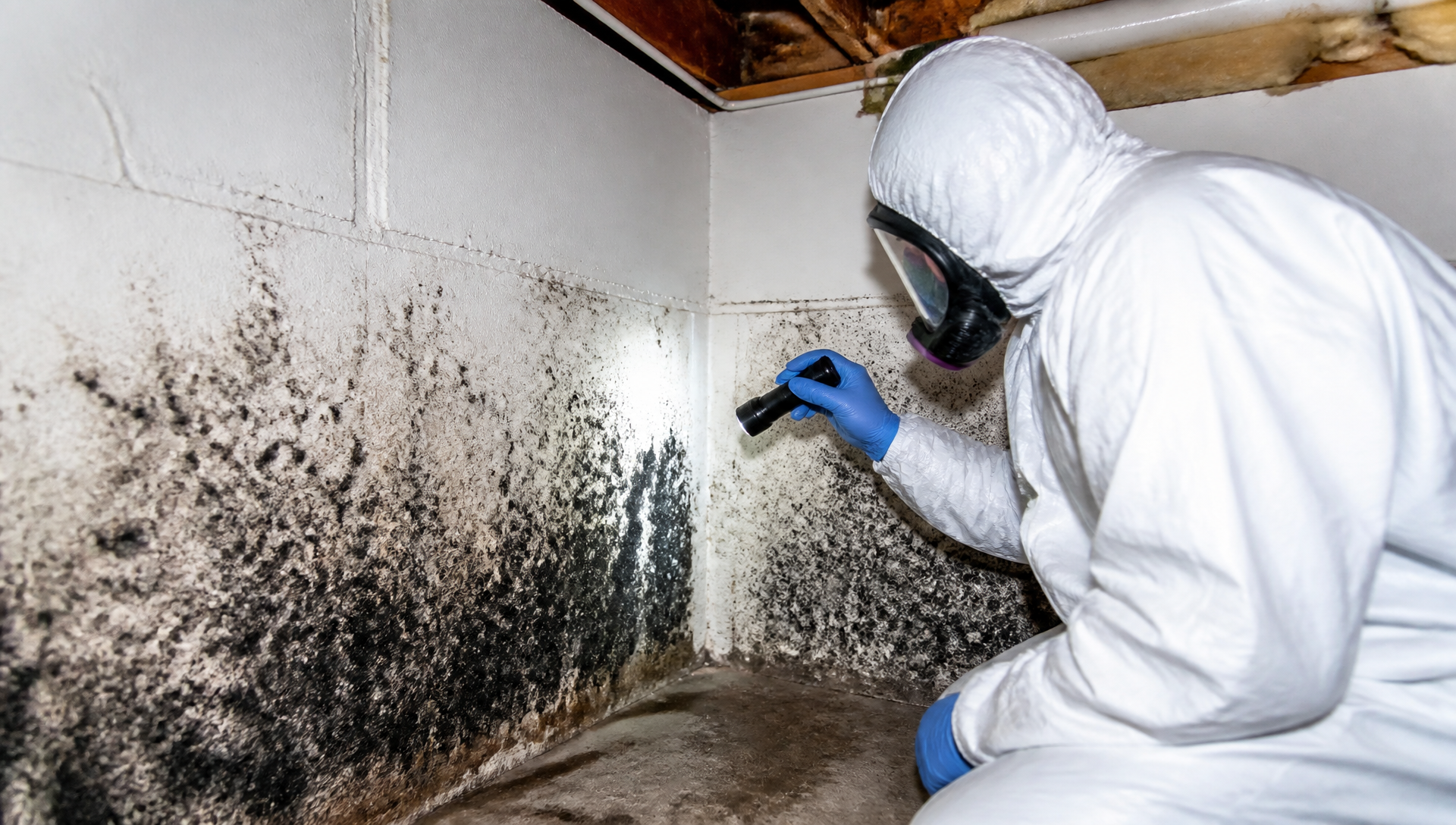
Mold Removal Long Island — Licensed Black Mold Remediation & Air Quality Restoration
NY-Licensed. IICRC-Certified. Lab-Verified Mold Free. (516) 306-7749.
Mold doesn't just damage your Long Island home — it endangers your family's health. Toxic black mold (Stachybotrys), Aspergillus, Cladosporium, and Penicillium thrive in Long Island's humid coastal climate, growing inside walls, basements, attics, and HVAC systems where you can't see them. Alfa Restorations is a New York State Article 32 licensed mold removal contractor serving all of Nassau and Suffolk County with IICRC-certified technicians (AMRT, WRT), EPA-registered antimicrobials, full containment with HEPA negative-air, and independent post-remediation lab verification — so you know your home is truly mold free.
Why Long Island Trusts Alfa for Mold Removal
| Why Long Island Trusts Alfa | What It Means For You |
|---|---|
| NY State Labor Law Article 32 Licensed Contractor | Legally required for any mold project over 10 sq ft — we hold the license |
| IICRC-Certified Technicians (AMRT + WRT) | ANSI/IICRC S520 standard remediation, not surface bleaching |
| EPA-Registered Antimicrobials & Encapsulants | Kills mold at the spore level and prevents regrowth |
| Independent Post-Remediation Verification (PRV) | Third-party lab clearance before we close the project |
| Full Containment + HEPA Negative-Air Machines | Spores stay isolated — they don't spread to clean rooms |
| Direct Insurance Billing & Documentation | We file the claim, document the loss, and bill your carrier directly |
| In-House Reconstruction Team | We remove the mold AND rebuild drywall, flooring, and trim — one contractor |
| 24/7 Emergency Response Across Nassau & Suffolk | 30-minute response after sudden water events that cause mold |
Why Long Island Homes Have a Mold Problem
Long Island's geography is a perfect storm for mold growth. Surrounded by water, with humid summers, mild winters, and aging housing stock, mold finds ideal conditions year-round — and once it starts, it doubles in 24–48 hours.
Coastal humidity averages above 70% across Nassau and Suffolk all summer. Older homes (especially pre-1970 capes, ranches, and colonials) have inadequate vapor barriers, knob-and-tube cavities, and undersized ventilation. South Shore basements face high water tables and chronic moisture even without a flood event.
Every nor'easter, hurricane, and ice-dam season leaves homes with hidden moisture trapped behind drywall, under flooring, and inside insulation for months. HVAC drip pans, condensate lines, and ductwork are prime mold breeding grounds. Bathroom exhaust fans discharging into attics instead of through the roof is a Long Island-specific problem we see constantly — and it's a guaranteed attic mold sentence.
Mold isn't a cosmetic problem — it's a health hazard. The CDC and EPA confirm prolonged exposure causes respiratory irritation, asthma triggers, allergic reactions, chronic sinus infections, headaches, fatigue, and severe complications for infants, elderly residents, and immunocompromised individuals. If you can smell musty odors, see discoloration on walls or ceilings, or notice allergy symptoms that get worse at home and better when you leave, you likely have mold.
Types of Mold We Remediate on Long Island
Identification matters — different molds require different treatment protocols. Our mold inspection includes laboratory air sampling and surface testing.
Stachybotrys (Black Mold)
The dangerous one. Black or dark green, slimy texture, found in chronically wet areas. Produces mycotoxins linked to neurological symptoms with prolonged exposure.
Aspergillus
Common indoor mold causing allergic reactions. Found in HVAC systems, damp basements, and water-damaged drywall.
Cladosporium
Green or black mold growing on fabrics, carpets, and wood. A major asthma trigger across Long Island bedrooms and basements.
Penicillium
Blue-green mold often found after water damage events. Spreads quickly through porous materials and into HVAC ducts.
Alternaria
Common in damp showers, bathtubs, and under sinks. Strong allergen — frequent culprit in Long Island bathrooms.
Chaetomium
Found in chronically water-damaged drywall. Distinct musty odor and a sign of long-term moisture intrusion.
Fusarium
Grows on water-damaged carpet and fabrics — common after sump pump failures and basement floods.
Complete Mold Removal Services Across Long Island
Our 6-Step Mold Removal Process
Every Alfa mold project follows the ANSI/IICRC S520 standard and NY Labor Law Article 32 protocol. No shortcuts, no surface bleaching, no "spray and pray."
- 1
Free On-Site Inspection
Licensed mold assessor walks the property, documents visible mold, moisture readings, and recommends scope. Photos and measurements for your insurance claim.
- 2
Independent Lab Testing
Air and surface samples sent to a third-party AIHA-accredited lab. You get written confirmation of mold species and spore counts before any work begins.
- 3
Containment & HEPA Negative Air
6-mil poly containment barriers, HEPA-filtered negative-air machines, and decontamination chambers — so spores never reach clean rooms.
- 4
Source Removal & HEPA Vacuuming
Affected drywall, insulation, and porous materials are double-bagged and removed. All framing is HEPA vacuumed and damp-wiped per S520.
- 5
Antimicrobial Treatment & Encapsulation
EPA-registered antimicrobials applied to all remaining surfaces, followed by clear encapsulant to prevent any future spore germination.
- 6
Post-Remediation Verification (PRV)
An independent industrial hygienist re-tests the area. We do not close the project until lab results confirm spore counts are normal.
Mold Remediation Cost on Long Island
Many homeowners insurance policies cover mold remediation when the underlying cause (burst pipe, roof leak, etc.) is a covered loss. We help document the claim.
| Severity | Cost Range |
|---|---|
| Small mold removal (under 10 sq ft) | $500 – $2,500 |
| Moderate (basement, multiple areas) | $2,500 – $8,000 |
| Large project (whole home, HVAC, structural) | $8,000 – $25,000+ |
| Mold inspection & lab testing only | $300 – $700 |
We bill insurance directly. Most homeowners only pay their deductible. See insurance claims help.
Related Long Island Restoration Services
Disasters rarely come alone — water leads to mold, fire leads to smoke, oil burners cause puff backs.
Long Island Mold Remediation FAQ
Long Island's Trusted Mold Remediation Specialists
NY-licensed. IICRC-certified. Health-focused. Insurance-approved. We test, remove, and verify — no shortcuts.
(516) 306-7749