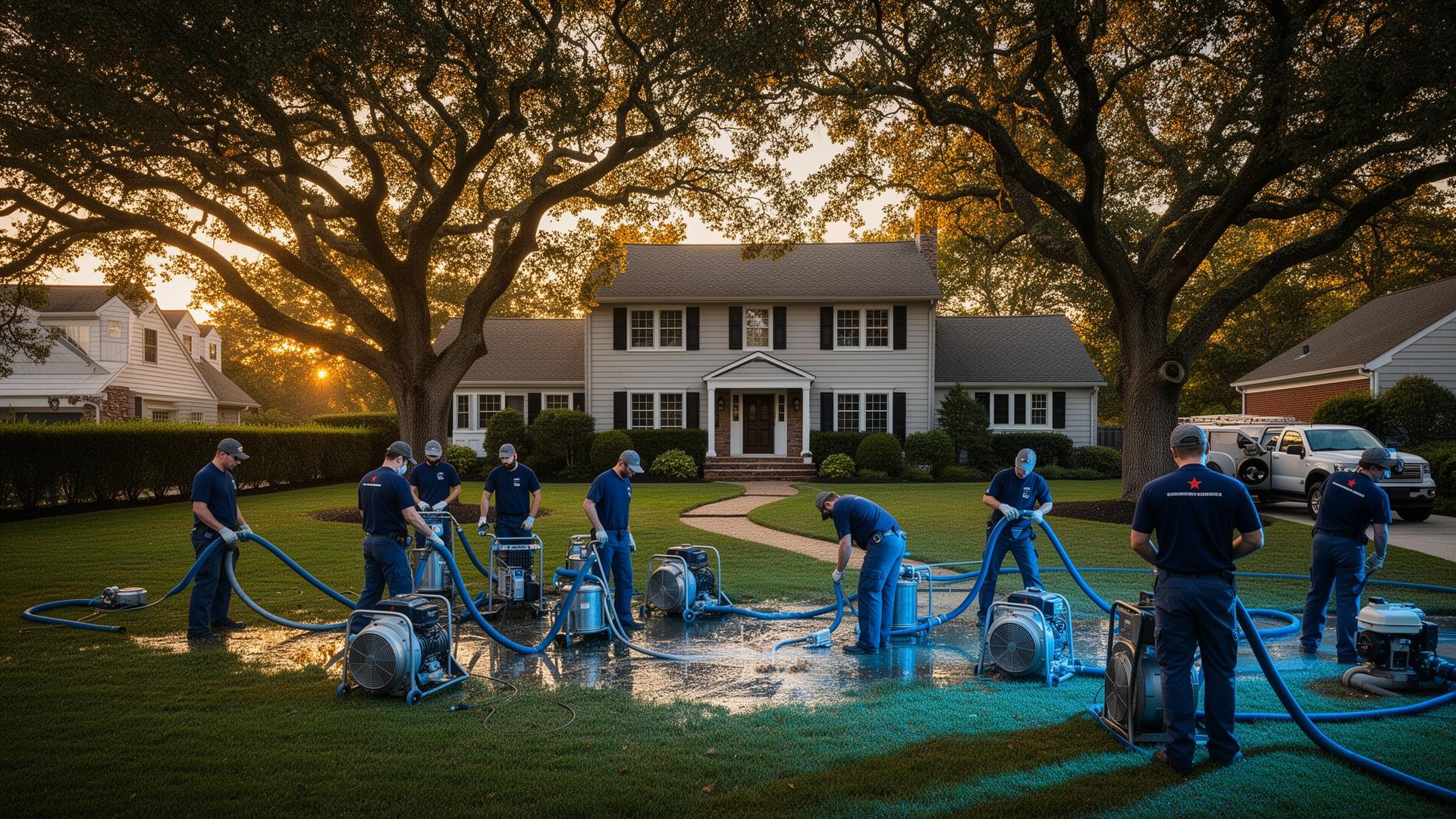
Basement Flooding Cleanup in Freeport, NY
Standing water out within 24 hours, structure dried in 3 to 5 days. Mold begins colonizing wet drywall and framing after about 24 hours, so the first day decides whether this is a drying job or a demolition job. 30-minute average response to Freeport. Call (516) 306-7749.
Low-lying canal networks around the Nautical Mile and Atlantic Avenue leave Freeport homes vulnerable to tidal surges and fluctuating water tables. Whether bay water tops your bulkhead or an inland plumbing failure floods a living area, Alfa Restorations delivers rapid water removal. Our crews use industrial pumping equipment across Freeport to restore damaged spaces, preventing deep structural rot and aggressive mold growth.
Local Flood Risk
Why Basements Flood in Freeport
Canal surges regularly push tidal bay water over low or aging bulkheads. Along the Nautical Mile and residential canals off Woodcleft, hundreds of homes sit directly on tidal water with bulkheads as their sole barrier. Nor'easters and tropical systems force bay water over these edges. The water that enters a basement is contaminated Category 3 from the moment it crosses the threshold.
Groundwater levels along waterfront streets fluctuate directly with the ocean tides. Foundation seepage on canal-front parcels tracks bay tides rather than the timing of rainfall. Because high tides push groundwater straight through foundations, pumping against a rising water table during a coastal surge is futile. Crews must stage extraction for when the tide drops.
Bulkhead wear and yard grading create sharply uneven flood risks between neighboring homes. The difference between two neighboring Freeport houses during a major storm typically comes down to the condition of each bulkhead and the soil grade behind it. Low, deteriorating bulkheads cause repeated structural flooding at the same addresses, signaling the need for long-term drainage adjustments.
Inland homes north of Sunrise Highway experience flooding from routine mechanical breakdowns. Inland Freeport presents an entirely different set of water hazards compared to the coast. Basements in these neighborhoods flood primarily from failed sump pumps, leaking water heaters, and burst clean water supply lines, rather than tidal waters.
How We Work
Our Basement Flood Process
IICRC-certified crews out of Hauppauge, on call 24/7 for Freeport. We extract, dry to a measured standard, prevent mold and bill your insurance directly.
- 1
Dispatch. 24/7, 30-minute average.
- 2
Safety. Power off, source stopped.
- 3
Moisture mapping. Meters and thermal imaging set the dry standard.
- 4
Extraction. Standing water out in the first hours.
- 5
Controlled removal. Only contaminated or saturated material.
- 6
Structural drying. 3 to 5 days, readings logged daily.
- 7
Verification. Final documented readings, then rebuild.
Full detail, including what to do before we arrive: flooded basement cleanup on Long Island.
Get Immediate Help
What It Costs to Clean Up a Flooded Basement in Freeport
Most flooded basement cleanups in Freeport run $2,000 to $10,000, depending on four things: how long the water sat, whether the space was finished, whether the water was contaminated, and whether contents have to be packed out.
| Scenario | Typical range |
|---|---|
| Unfinished basement, clean water, caught same day | $1,500 to $3,500 |
| Finished basement, clean water, drying plus some drywall and flooring | $4,000 to $8,000 |
| Groundwater seepage, finished space, pad and lower drywall removed | $5,000 to $12,000 |
| Sewage backup, finished basement, containment and rebuild | $8,000 to $20,000+ |
| Specialty drying for slab, hardwood or plaster | add $2,000 to $5,000 |
We document the loss to carrier standards and bill insurance directly where coverage applies.
Serving Freeport and Nearby Communities
We also cover Oceanside, Long Beach, Massapequa, Hempstead and every town in Nassau and Suffolk County.
See all of Nassau County, or see water damage restoration in Freeport.
Flooded Basement in Freeport? Common Questions
Straight answers for Freeport homeowners.
Flooded Basement in Freeport? We're Ready Now.
Every hour standing water sits, mold and structural damage grow. Our team is on call 24/7 for Freeport homeowners and businesses.
(516) 306-7749